

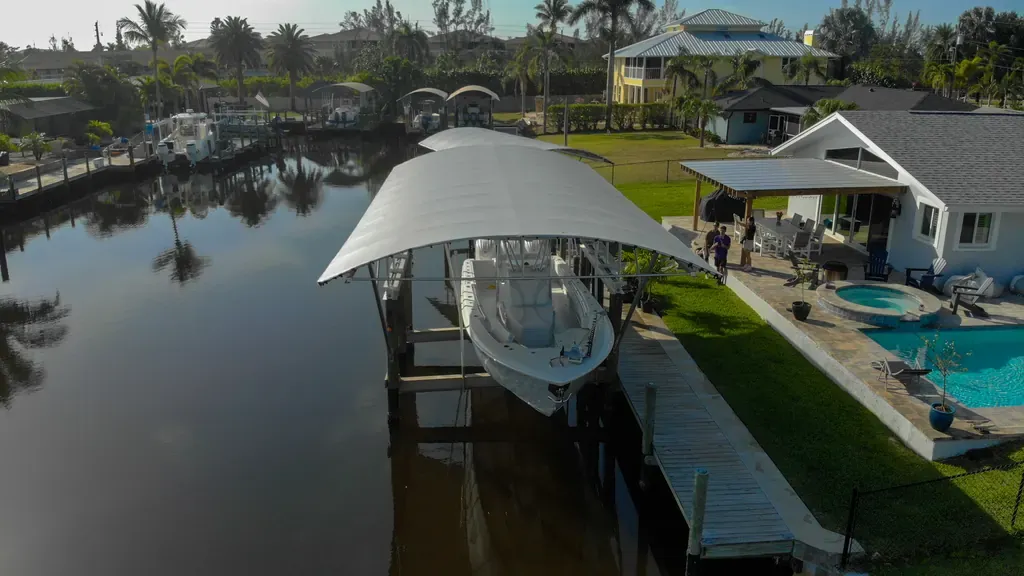
Boat Lift Canopy Cover Replacement: What to Expect
A boat lift canopy cover replacement is usually simpler than replacing the entire canopy system. If your frame is still straight, secure, and properly sized, you may only need a new fabric cover that is measured, fabricated, and installed to fit the existing structure. For Florida boat owners, that can restore shade, improve storm readiness, and protect the boat from UV, rain, salt air, and debris without starting over with a new frame.
Request a free estimate from Coastline Boat Lift Covers to have your existing frame inspected and measured for a custom replacement cover.
This guide walks through what happens during a cover-only replacement, how the crew evaluates your frame, which fabric details matter, and what you can do before installation day. It is written for boat owners who already have a canopy frame and want to know whether the cover can be replaced without rebuilding the whole system.
What Is a Boat Lift Canopy Cover Replacement?
A boat lift canopy cover replacement means removing the worn fabric from an existing boat lift canopy frame and installing a newly fabricated cover that fits that frame. The frame stays in place unless inspection shows that it is damaged, bent, corroded, poorly supported, or no longer appropriate for the boat and dock layout.
That distinction matters. A full canopy replacement often includes a new frame, new uprights, new hardware, and a new cover. A cover-only replacement focuses on the fabric, fastening system, seams, stitching, color, and fit. The goal is to restore weather protection while using a frame that still has useful life left.
Cover-only replacement is common when the fabric has faded, stretched, torn, or started holding water, but the frame remains sound. If you are still deciding whether repair or replacement makes more sense, Coastline also explains the decision process in its guide to boat lift canopy repair versus replacement.
When Can You Keep the Existing Frame?
You can usually keep the existing frame when it is structurally sound, aligned, and compatible with the type of replacement cover you want. During the assessment, the crew looks for signs that the frame can support a new cover without creating premature wear or safety problems.
A frame is a better candidate for reuse when:
- The bows, rails, and uprights are straight and secure.
- The frame has no major corrosion, cracks, or loose connections.
- The size still matches the boat, lift, and dock layout.
- The cover attachment points are in usable condition.
- The frame sheds water correctly when the fabric is properly tensioned.
A new cover cannot solve every problem. If the frame is out of square, undersized for the boat, poorly braced, or damaged from wind, a fresh fabric cover may fit poorly or fail early. In that case, Coastline may recommend a frame update instead of forcing a cover onto a structure that will not perform well.
For boat owners who are unsure what they have, the starting point is a professional look at the entire system. Coastline offers several boat lift canopy frame styles, but the replacement conversation begins with whether your current frame can do its job.
Step 1: The Existing Canopy Is Inspected
The first step is an on-site assessment. A trained technician checks the fabric, frame, fastening points, bungees, stitching, and overall condition of the canopy system. This is not just a quick look at the top of the cover. The details underneath matter because the new cover will rely on those same frame lines and attachment points.
The inspection usually answers four practical questions:
- Is the current cover simply worn out, or is there a deeper frame issue?
- Does the frame still fit the boat and lift correctly?
- Are the attachment points secure enough for a new cover?
- Are there access, dock, or HOA factors that affect installation?
Common reasons for replacement include UV fading, permanent sagging, seam separation, brittle fabric, torn corners, mildew staining, and water pooling. Coastline covers those warning signs in more detail in When to Replace Your Boat Lift Canopy.
This assessment protects you from spending money in the wrong place. If a repair will not hold, replacement is the cleaner option. If the frame is compromised, a cover-only replacement may not be the right recommendation.
Step 2: Measurements Are Taken From the Actual Frame
After the frame passes inspection, the next step is measurement. Accurate measurements are the difference between a cover that looks tight and clean and one that sags, flaps, rubs, or pulls at the seams.
For a custom boat lift canopy cover replacement, the technician may confirm:
- Overall frame length and width
- Bow spacing and frame shape
- Drop, slope, and side coverage needs
- Overhang or no-overhang requirements
- Attachment method and bungee layout
- Dock access and lift position
Even small measurement errors can create problems. A cover that is too loose can trap water and move in the wind. A cover that is too tight can stress seams, corners, and hardware. That is why professional measurement is part of Coastline’s quote process rather than an afterthought.
If you want to understand the dimensions involved before your estimate, review Coastline’s guide on how to measure your boat lift for a custom cover. You do not need to have perfect measurements before calling, but it helps to know what the crew will be checking.
Step 3: Fabric, Color, and Stitching Options Are Reviewed
Once the frame dimensions are confirmed, the replacement cover is specified. This is where fabric quality matters. In Southwest Florida, a canopy cover has to deal with intense sun, humidity, rain, salt air, mildew pressure, and seasonal storm risk. A generic cover fabric may look acceptable at first, but it can fade, stretch, or break down faster in coastal conditions.
Coastline uses Patio 500 vinyl-laminated polyester fabric for its boat lift covers. It is a marine-grade material selected for waterfront environments because it is waterproof, UV resistant, heat reflective, tear resistant, mildew resistant, and easy to clean with soap and water. Coastline also offers a broad color selection, which helps homeowners coordinate the cover with the home, dock, boat, or HOA requirements.
Stitching is just as important as the fabric panel. Seams and thread are high-stress areas, especially on covers exposed to wind and sun. Coastline uses GORE TENARA thread, a premium thread known for long-term resistance to UV exposure. The company backs its stitching with a lifetime stitching guarantee, which is a major trust signal for boat owners replacing a cover in a harsh marine climate.
For a deeper look at material differences, see Coastline’s article on marine-grade vinyl versus standard canopy fabric.
Step 4: The Replacement Cover Is Fabricated
After the quote is approved and the details are finalized, the replacement cover is fabricated to match the measured frame. This is where a custom replacement separates itself from a one-size-fits-most cover.
A properly fabricated replacement cover should account for the specific frame style, the size of the lift, the desired coverage, and the fastening method. The goal is an even fit that sheds water, resists wind movement, and avoids unnecessary stress points.
During fabrication, the team turns the field measurements into a finished cover with the correct panel layout, seams, edge reinforcement, and attachment points. For Florida waterfront homes, the cover also needs to be practical for cleaning and future service. The best replacement is not just the one that fits on installation day. It is the one that continues to fit after months of sun, rain, and daily exposure.
Step 5: The Old Cover Is Removed
On installation day, the crew removes the old canopy cover from the frame. Depending on the condition of the old cover, this can be straightforward or more delicate. Severely brittle fabric, broken bungees, and damaged seams may come apart during removal, so the crew works carefully around the frame and dock.
This is also a good time to check the frame one more time while the fabric is off. With the cover removed, the crew can see hidden wear points, loose hardware, and areas where the old cover may have been rubbing or pulling unevenly.
If the cover is being replaced before hurricane season, ask about the condition of bungees and related hardware. A new cover should not be installed with worn fastening components if those parts will reduce performance.
Step 6: The New Cover Is Installed and Tensioned
The new cover is then positioned over the frame and secured according to the canopy design. This step is about more than pulling the cover tight. Proper tension helps the canopy shed rain, reduce flapping, and protect the seams from unnecessary stress.
The crew checks that the cover is centered, aligned, and evenly tensioned. They look for low spots where water might pool and areas where the fabric could rub against the frame. They also confirm that the attachment points are secure and that the finished cover gives the boat and dock the intended shade and protection.
Mid-project CTA: If your existing cover is sagging, torn, or faded, schedule a free estimate before the damage reaches your boat or frame.
Step 7: Final Checks and Owner Walkthrough
After installation, the crew performs a final quality check. They confirm that the cover sits correctly, the fasteners are secure, and the canopy has a clean finished appearance. If there are special care instructions or service recommendations, this is when the owner should ask questions.
Good questions to ask during the walkthrough include:
- How should I clean the new cover?
- How often should the bungees or fasteners be checked?
- What signs of wear should I watch for?
- Should the cover be removed before a named storm?
- What warranty coverage applies to the fabric and stitching?
This is also the time to confirm any seasonal service needs. Florida boat owners should think about the new cover as part of a broader protection plan, not a set-it-and-forget-it item.
How Long Does Cover Replacement Take?
The on-site installation itself is usually the shortest part of the process. The full timeline depends on inspection, measurement, quote approval, fabrication, scheduling, weather, and access to the dock.
For most owners, the process follows this order:
- Request a free estimate.
- Schedule the site visit and measurement.
- Review material, color, and replacement recommendations.
- Approve the custom quote.
- Allow the cover to be fabricated.
- Schedule installation.
- Complete final checks after the new cover is installed.
Weather can affect scheduling, especially during storm season. Access can also matter if the dock layout is tight or the lift is difficult to reach. The best way to avoid last-minute delays is to start the replacement conversation as soon as the fabric shows clear wear, not after a storm is already approaching.
What Should You Do Before the Crew Arrives?
A little preparation makes installation day easier. Before the crew arrives, clear the dock area around the lift as much as possible. Move loose furniture, dock boxes, fishing gear, hoses, and anything else that could slow access to the frame. If the boat needs to be moved or lowered, confirm that ahead of time with the team.
You should also gather any details that may affect the replacement, including HOA color rules, preferred fabric color, past canopy issues, storm damage history, and whether the existing cover was made by Coastline or another company. Coastline can service multiple brands, but the more information you provide, the smoother the assessment becomes.
Can You Replace the Cover Yourself?
Some boat owners consider DIY cover replacement, especially if they are comfortable working around docks and lifts. The challenge is not only getting the fabric over the frame. The harder parts are measuring correctly, matching the frame style, managing tension, working safely over water, and avoiding seam stress that shortens the cover’s life.
DIY may be reasonable for certain supply-kit situations, but professional replacement is the safer choice when the lift is large, the frame is high, the dock access is limited, or the owner wants the fit and warranty confidence that comes with a professionally measured cover.
If you are comparing the two options, Coastline’s guide to DIY versus professional boat canopy installation explains the tradeoffs.
How Replacement Protects Your Boat and Dock
A new canopy cover does more than improve curb appeal from the water. It restores the protection that the original cover was supposed to provide. That can reduce UV exposure on upholstery, electronics, gelcoat, and finishes. It can also help keep rain, leaves, bird droppings, and windblown debris off the boat.
For waterfront homeowners in Fort Myers, Cape Coral, Bonita Springs, Naples, Marco Island, Punta Gorda, and nearby Florida markets, sun and storm exposure are constant. A worn cover may look like a cosmetic issue, but once fabric loses its tension and coating, protection drops quickly.
A well-fit replacement cover also supports the dock’s appearance. Many homeowners choose a new color during replacement to better match the home, dock, seawall, or neighborhood requirements.
What About Hurricane Season?
A replacement cover is an important part of regular maintenance, but it is not a hurricane shield. During named storms or severe wind events, the safest plan may involve removing and storing the canopy cover before conditions deteriorate. Leaving a cover up in dangerous wind can put stress on the cover, frame, lift, and dock.
Coastline offers a dedicated Hurricane Protocol service for removal, storage, and reinstallation planning. If you are replacing a cover close to hurricane season, ask whether you should also reserve a removal spot. Pre-planning is much easier than trying to find emergency service when a storm is already in the forecast.
Cover-Only Replacement vs. Full Canopy Replacement
The best choice depends on the condition of the whole system. Use this simple comparison as a starting point.
| Situation | Likely Best Option | Why |
|---|---|---|
| Fabric is faded, brittle, or torn, but frame is straight | Cover-only replacement | The frame can still support a properly fitted new cover. |
| Cover sags because fabric has stretched over time | Cover-only replacement after inspection | New fabric and correct tension may restore water shedding. |
| Frame is bent, loose, corroded, or out of square | Full canopy evaluation | A new cover will not correct structural problems. |
| Boat, lift, or dock layout has changed | Professional reassessment | The old frame may no longer provide the right coverage. |
The key is not to guess. A free estimate gives you a clear recommendation based on the actual frame, not a generic answer.
Why Work With Coastline for Replacement Covers?
Coastline Boat Lift Covers has served Florida boat owners since 2010 and manufactures custom boat lift covers through its Fort Myers operation. The company focuses on marine-grade materials, professional measurement, clean installation, and service support built around Florida’s coastal conditions.
For replacement covers, that means you get a practical process: inspect the existing frame, measure the actual system, specify the right fabric and stitching, fabricate a custom cover, install it correctly, and support the owner with care and seasonal guidance.
Coastline’s replacement approach is especially useful for boat owners who want to keep a good existing frame but refresh the protection, appearance, and performance of the cover. You do not have to assume the whole canopy needs to be replaced. You need an honest inspection and a cover that is built for the frame you already have.
Request a Free Boat Lift Canopy Cover Replacement Estimate
If your canopy cover is faded, sagging, torn, leaking, or starting to pull apart at the seams, do not wait until the next storm exposes the problem. A boat lift canopy cover replacement can restore protection while preserving the frame when the structure is still in good condition.
Request your free estimate today and let Coastline inspect your existing canopy, measure your frame, review Patio 500 fabric color options, and recommend the right cover-only replacement plan for your boat lift.