

Boat Canopy for Dock: DIY vs Professional Installation
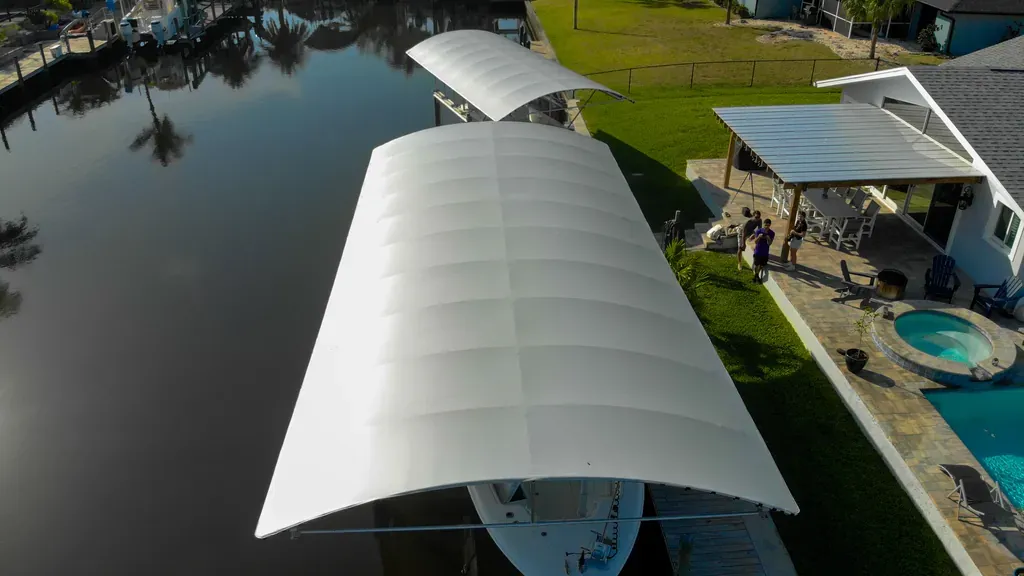
A boat canopy for dock protection can look simple from a distance: a frame, a fabric top, and a shaded place for your boat to rest on the lift. The real decision is more detailed. If you are comparing a DIY kit with professional installation, you need to think about measurements, frame strength, wind exposure, fabric tension, dock layout, warranty coverage, and how the canopy will perform through Florida sun, salt air, and storm season.
Not sure whether your dock is a DIY fit or a professional install? Request a free estimate from Coastline Boat Lift Covers for measurement guidance, frame recommendations, and installation options.
For some boat owners, a supply kit can be a practical choice. For many waterfront homes in Southwest Florida, a professional install is the safer and longer-lasting path. This guide compares both options so you can make a confident decision before ordering a frame, stretching a cover, or drilling into a lift structure.
Quick Answer: Should You DIY a Boat Canopy for Your Dock?
DIY boat canopy installation can work when the lift is simple, the dock has easy access, the owner is comfortable with precise measurement, and the kit comes from a manufacturer that can support the project. Professional installation is usually the better choice when the boat is large, the dock layout is tight, the frame needs custom overhang or clearance, the location is exposed to coastal wind, or warranty protection depends on correct installation.
The simplest way to compare the two options is to look beyond the upfront price. A canopy that is measured incorrectly, tensioned unevenly, or attached with the wrong hardware can lead to fabric wear, frame stress, wind damage, dock interference, and possible warranty issues. Professional installation costs more upfront, but it reduces the chance of expensive mistakes.
What a Dock Canopy Installation Really Involves
A dock canopy is not just a shade cover. It is a fitted protection system that has to work with your boat, lift, pilings, seawall, dock boards, rooflines, and local weather. The installation process usually includes measuring the lift, selecting the right boat lift canopy frame style, confirming clearance, attaching uprights, assembling the frame, installing the cover, setting fabric tension, checking fasteners, and making sure the boat can enter and exit the lift without rubbing.
The best result starts with the boat in the raised position. That is where the canopy has to protect the console, windshield, T-top, tower, radar arch, outboard, upholstery, and deck surfaces. Measuring the boat at the wrong point can create a cover that looks fine when empty but fails when the boat is actually on the lift.
Dock conditions matter too. A wide, open dock with clear access is different from a narrow walkway beside a seawall. A lift in a protected canal is different from one facing open water. A simple center console without a top is different from a pontoon, bay boat, or tower boat with high accessories.
DIY Boat Canopy Installation: When It Can Make Sense
A DIY approach can be a good fit for experienced owners who want direct involvement and have the tools, time, and confidence to handle the work. Coastline serves national customers with supply kit options, which can be useful when professional installation is not available in the area or when the dock owner already has a qualified local installer.
DIY installation is most realistic when the project has these traits:
- Straightforward lift layout: The lift has clear mounting points, accessible walkways, and no unusual piling conflicts.
- Moderate boat size: The boat does not require extreme height, width, or custom clearance.
- Good measurement confidence: The owner can measure lift width, length, boat height, raised position, overhang needs, and dock clearances accurately.
- Proper tools and helpers: Frame sections and fabric covers can be awkward to lift, align, and tension without assistance.
- Clear instructions: The kit includes the correct components, hardware guidance, and support if a measurement or assembly question comes up.
DIY can also make sense for boat owners outside Coastline’s local installation area who still want a quality frame and cover. In that case, the supply kit route may provide the product while a qualified local contractor or handy owner handles the installation.
Where DIY Installation Gets Risky
The biggest DIY risk is not usually the first day. It is what happens after weeks of sun, rain, wind, lift movement, and fabric tension. Small installation errors can become visible as loose cover sections, puddling, bent supports, chafed fabric, stressed fittings, or shade gaps over the boat.
Common problems include:
- Wrong width or length: A canopy that is too narrow may leave the boat exposed. One that is too wide may create more wind load or dock interference than expected.
- Insufficient clearance: Towers, antennas, bimini frames, T-tops, and consoles can rub the cover or frame if height is miscalculated.
- Uneven fabric tension: Loose fabric can flap, collect water, and wear faster. Over-tight fabric can stress seams, hems, and attachment points.
- Poor hardware selection: Coastal docks need corrosion-resistant components that can handle salt air and humidity.
- Weak support layout: Too few uprights or poorly placed supports can reduce stability, especially in wind-prone areas.
- Warranty issues: Some warranty coverage may depend on correct product use, installation, maintenance, and storm preparation.
Wind exposure is the issue many owners underestimate. A canopy is a large surface area above the dock. If it is poorly anchored or improperly tensioned, wind can turn a small flaw into a major repair. That is especially important in Southwest Florida, where hurricane season and afternoon storms are part of dock ownership.
Professional Installation: What You Are Paying For
Professional installation is not just labor. It includes field measurement, product selection, layout judgment, fabrication knowledge, and accountability. Coastline’s process begins with understanding the lift, the boat, and the owner’s goals before recommending a frame style or cover configuration.
A professional installer helps answer questions like:
- How much overhang will protect the boat without making the frame awkward on the dock?
- Which frame shape works with the boat’s height, accessories, and lift position?
- Where should uprights be placed for strength and dock access?
- Will the canopy interfere with pilings, seawalls, walkways, or neighboring structures?
- How should the cover be tensioned so it sheds water and resists premature wear?
- What storm preparation plan makes sense for this location?
That practical judgment is hard to replace with a generic diagram. Coastline manufactures and installs custom boat lift canopy systems in Florida, using marine-grade materials, custom measurement, and frame options designed for coastal conditions. For many homeowners, that support is the difference between a canopy that simply fits and a canopy that performs.
Frame Choice Matters as Much as Installation
The frame is the backbone of the canopy. It affects shade, wind resistance, clearance, appearance, maintenance access, and long-term durability. Before choosing DIY or professional installation, compare the frame style itself.
Coastline offers several frame styles for different dock and boat setups:
- Dominica I-Beam: Built for maximum strength and wind resistance, with extra dock shade that can make cleaning and maintenance easier.
- Cayman: A versatile option for boats without tops or situations where space and clearance are priorities.
- Barbados: A traditional V-shape frame with overhang for extended boat and dock coverage.
- Antigua: A direct-coverage frame with drop-down sides for tight spaces or docks that do not need extra overhang.
The Dominica I-Beam is especially relevant for owners comparing long-term durability. I-beam construction is designed to reduce sagging and improve strength compared with lighter standard tubing. Coastline also emphasizes 4 uprights per side, marine-grade materials, Patio 500 fabric, and GORE TENARA thread as part of its durability position.
Comparing frame styles before you buy? Review Coastline’s canopy frame styles or request help choosing the right option for your dock.
Cost Comparison: Upfront Price vs Long-Term Value
DIY usually looks less expensive at first because you are reducing labor and installation costs. That can be attractive if the dock is simple and you are comfortable doing the work. But the total cost should include more than the kit price.
When comparing DIY and professional installation, consider:
- Measurement risk: A wrong size can mean replacement parts, shipping delays, or a cover that does not protect the boat properly.
- Tool and labor needs: Ladders, drills, bits, hardware, safety gear, and helpers all add time and cost.
- Repair risk: Fabric damage, bent supports, or loose mounting points can cost more than the labor saved.
- Warranty value: A properly installed system is easier to document, maintain, and support.
- Boat protection: The real asset is the boat. Better shade and weather protection can reduce cleaning, fading, upholstery wear, and exposure.
Professional installation is usually a stronger value when the boat is expensive, the dock is exposed, the frame is large, or the owner wants a single accountable team from measurement through installation. Coastline uses a custom quote model because every lift, dock, and canopy configuration is different.
How Installation Affects Warranty and Storm Readiness
Warranty coverage is one of the most overlooked parts of this decision. Coastline is known for strong warranty positioning, including a 10-year frame warranty, 5-year canopy warranty, and lifetime stitching guarantee. Those protections are only useful if the system is installed, used, and maintained properly.
Improper installation can create the kind of stress that looks like product failure but actually comes from uneven tension, wrong attachment points, poor drainage, or incorrect fit. If a frame is not aligned or a cover is not tensioned correctly, the canopy may wear faster than it should.
Storm readiness is another reason installation quality matters. No canopy should be treated as storm-proof. If sustained high winds are expected, removal may be recommended to protect the canopy, dock, and lift. Coastline’s Hurricane Protocol gives local customers a structured option for canopy removal, storage, and reinstallation during named storm threats.
That service is a major advantage for homeowners who are seasonal, travel often, or do not want to scramble when a storm is already in the forecast. A professional installation team also understands how the canopy should come off and go back on without damaging the system.
DIY vs Professional Installation: Side-by-Side
| Factor | DIY Installation | Professional Installation |
|---|---|---|
| Best fit | Simple lifts, handy owners, national supply kit customers | Custom docks, larger boats, exposed locations, local Florida homeowners |
| Upfront cost | Usually lower because labor is reduced | Higher because measurement and installation are included |
| Measurement responsibility | Owner or local installer | Professional team |
| Risk level | Higher if clearance, tension, or support layout is wrong | Lower because the system is measured and installed by trained crews |
| Warranty confidence | Depends on correct installation and documentation | Easier to support because installation is handled by the provider |
| Storm planning | Owner must plan removal and reinstallation | Local customers can use Hurricane Protocol support |
When to Call in the Experts
Professional installation is the better choice when the project has any meaningful complexity. If you are unsure, that uncertainty is usually a sign to get the dock evaluated before ordering parts.
Call in the experts when:
- Your boat has a tower, T-top, radar arch, high console, or other clearance challenge.
- Your dock has tight walkways, unusual pilings, seawall limitations, or access issues.
- You want a larger frame, extra overhang, or more dock shade.
- Your location is exposed to open water, strong crosswinds, or hurricane-season risk.
- You need help choosing between a Dominica, Cayman, Barbados, or Antigua frame.
- You want warranty confidence and a clear service path after installation.
- You are a seasonal resident and need storm preparation support.
DIY can still be a good choice for the right owner. But if the cost of a mistake would be high, professional installation is the more practical investment.
Ready to compare your options? Get a free estimate from Coastline Boat Lift Covers and find out whether a supply kit or professional installation makes the most sense for your dock.
A Practical Decision Framework
If you are still undecided, use this simple framework.
Choose DIY or a supply kit if:
- You are outside the local installation area.
- The lift layout is simple and easy to access.
- You have accurate measurements and confidence in the install process.
- You have the tools, helpers, and time to complete the job safely.
- You are comfortable taking responsibility for fit, tension, and maintenance.
Choose professional installation if:
- You are in Southwest Florida or another area Coastline serves through installation support.
- You want a custom system measured for your boat and dock.
- You are investing in a stronger frame such as the Dominica I-Beam.
- You care about long-term durability more than the lowest upfront price.
- You want help with storm preparation, canopy removal, and reinstallation.
The right answer depends on your dock, not just your budget. A basic lift in a protected location may be a reasonable DIY project. A custom waterfront setup in coastal Florida usually deserves professional measurement and installation.
Bottom Line: Protect the Boat, Not Just the Budget
A boat canopy for dock protection should do more than create shade. It should fit the lift, clear the boat, handle daily weather, support the fabric correctly, and protect your investment season after season. DIY installation can be a smart option for capable owners and national supply kit customers, but it comes with measurement, fit, tension, wind, and warranty responsibilities.
Professional installation gives you a more complete path: accurate measurement, frame guidance, quality materials, trained installers, and local support if the weather turns. For many Florida boat owners, that peace of mind is worth more than the labor savings of doing it alone.
Protect your boat with the right canopy from the start. Request your free estimate from Coastline Boat Lift Covers today.