
If you spend any time on a Florida dock, you already know the sun is relentless. UV rays fade gel coats, crack upholstery, and turn a pleasant afternoon on the water into a sweat-soaked ordeal. The right shade solution protects your boat, your dock, and your comfort, all at once.
Request your free estimate from Coastline Boat Lift Covers to find the shade solution that fits your dock and your boat.
Below, we break down the most popular boat dock shade ideas, compare how they hold up in coastal conditions, and explain why custom-built canopies consistently outperform off-the-shelf options for Southwest Florida boat owners.
Why Shade Matters for Your Boat and Dock
Boat dock shade is about more than comfort. Direct sunlight accelerates wear on almost every surface it touches. Vinyl seats crack and peel. Fiberglass fades from deep gloss to chalky white. Teak dries out and splits. Even electronics and fishing gear degrade faster under constant UV exposure.
For docks themselves, sun-heated boards can reach surface temperatures above 150 degrees Fahrenheit in a Florida summer. That makes barefoot access painful and speeds up the weathering of wood and composite decking alike.
A well-designed shade structure addresses all of these issues. It keeps your boat cooler, reduces maintenance costs, extends the life of your upholstery and finish, and makes the dock a place you actually want to spend time. The question is not whether you need shade. The question is which type works best for your setup.
Boat Lift Canopies: The Go-To Shade Solution
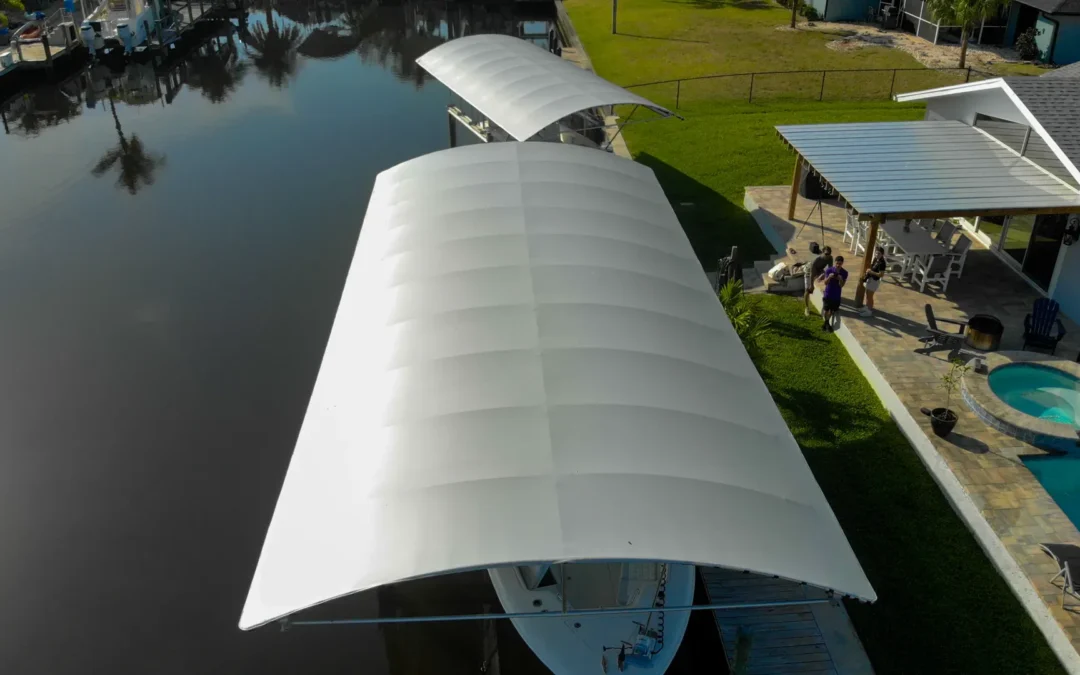
Boat lift canopies remain the most popular shade option for dock owners in Florida, and for good reason. A canopy mounts directly to your boat lift frame, covering the slip where your boat sits. This keeps rain, sun, bird droppings, and debris off the boat while it is stored on the lift.
The key advantages of a boat lift canopy include:
- Full overhead coverage for the boat and a portion of the dock
- Permanent installation that stays in place through daily weather changes
- Custom fit to match your specific lift dimensions and boat size
- Marine-grade fabrics like Patio 500 that resist UV, mildew, and tearing
Not all canopies are built the same, though. Frame construction, fabric quality, and engineering for wind loads vary widely between manufacturers. A canopy built with I-beam reinforcement and four uprights per side will handle coastal winds far better than a lightweight round-tube design with two uprights. The frame is the skeleton of the whole system, so cutting corners there shortens the life of everything above it.
Coastline Boat Lift Covers builds canopies in four frame styles, each designed around different dock layouts and protection needs. You can explore all frame styles here to see which fits your setup.
How to Create Shade on a Dock Without a Boat Lift
Not every dock has a boat lift, and not every boat owner needs one. If you are looking for dock shade without a lift-mounted canopy, several options work well.
Shade Sails
Shade sails are fabric panels stretched between anchor points, usually posts or dock structures, to create an angled shade area. They look clean, cost less than a full canopy, and work well for seating areas, fish cleaning stations, or sections of a dock where you want partial coverage.
The downsides: shade sails do not provide full coverage the way a canopy does. Wind can be an issue. Most shade sails are designed for patio use and are not engineered for sustained coastal gusts. In a storm, they need to come down, or they risk tearing loose and becoming a hazard.
Pergolas and Fixed Structures
A pergola adds architectural style to a dock and can support climbing plants, fabric draping, or louvered panels. Some dock owners prefer a permanent wood or aluminum pergola because it doubles as a design feature.
However, pergolas offer limited rain protection unless you add solid roof panels or retractable covers. They also require building permits in most Florida counties and must meet local wind-load codes, which adds cost and complexity. For waterfront properties in Southwest Florida, permitting alone can take weeks.
Retractable Awnings
Retractable awnings extend out from a wall or fixed frame and roll back when not in use. They are popular for patios and sometimes adapted for docks. The advantage is flexibility: you shade when you want and retract when you do not.
The drawback for dock use is durability. Most retractable awnings use lighter fabrics and mechanisms designed for residential patios, not waterfront exposure. Salt air corrodes moving parts, and high winds can damage the extended fabric before you have time to retract it.
Not sure which option fits your dock? Get a free, no-obligation estimate from Coastline.
Comparing Dock Shade Options Side by Side
| Shade Type | UV Protection | Wind Resistance | Rain Protection | Maintenance | Best For |
|---|---|---|---|---|---|
| Boat Lift Canopy | Full | High (with proper frame) | Full | Low | Boat storage on a lift |
| Shade Sail | Partial to Full | Moderate | Minimal | Moderate | Seating areas, partial shade |
| Pergola | Partial | High (if permitted) | Minimal (without panels) | Moderate to High | Aesthetic dock design |
| Retractable Awning | Full (when extended) | Low | Moderate (when extended) | High | Flexible patio-style shade |
| Custom Canopy System | Full | High | Full | Low | Tailored to unique docks |
For boat owners with a lift, the canopy is the clear winner. It provides the most protection with the least maintenance. For dock areas without a lift (seating, cleaning stations, entertaining spaces), shade sails or pergolas can work, but neither matches a canopy for raw durability in coastal conditions.
What Makes a Custom Canopy Different From a Generic One?
Walk into a marine supply store and you will find universal boat covers and canopy kits sold by approximate size. They cost less upfront. They also fit poorly, wear out faster, and leave gaps where sun and rain sneak through.
A custom canopy starts with a professional measurement of your specific boat lift. Every dock is a little different. Pilings are spaced unevenly. Lifts from different manufacturers have different beam widths. Boats come in hundreds of shapes and heights. A custom-built system accounts for all of that.
Here is what a custom approach typically includes:
- On-site measurement: A technician measures your lift, boat, and dock layout to the inch.
- Frame engineering: The frame is designed around your measurements, with the right number of uprights, cross-members, and bracing for your wind zone.
- Fabric selection: You pick from marine-grade fabrics rated for UV, mildew, and water resistance, with 30 or more color options to match your home or HOA requirements.
- Professional installation: The finished system is installed by a crew that works on docks every day, not a DIY weekend project.
The result is a canopy that fits right, looks right, and lasts. Coastline Boat Lift Covers backs their custom systems with a 10-year frame warranty, a 5-year canopy warranty, and a lifetime stitching guarantee, something you will not find on a generic kit.
Canopy Frame Styles to Consider
The frame is the foundation of any boat lift canopy. Different frame shapes provide different amounts of coverage and fit different dock layouts. Here are four common frame styles worth evaluating:
- Dominica with I-Beam: The strongest option, built for maximum wind resistance. The I-beam construction and extra dock overhang give you shade beyond the lift itself, making it easier to work on your boat or sit alongside it.
- Cayman: The most versatile frame. It works well for boats without tops and for docks in no-build zones where other structures may not be permitted.
- Barbados: A traditional “V” shape with a 12 to 30 inch overhang. This classic profile gives extended coverage with a clean, low-profile look.
- Antigua: A compact frame with drop-down sides, designed for tight spaces where you need direct coverage without extra overhang.
Each of these can be customized with or without I-beam reinforcement, depending on your wind exposure and budget. You can see all four with photos and specs on the Coastline frame styles page.
Choosing the Right Fabric for Dock Shade
The fabric on your canopy or shade structure does most of the heavy lifting when it comes to UV protection, water resistance, and longevity. Choosing the wrong fabric is one of the fastest ways to end up replacing a shade solution in two or three years.
For marine environments, look for these qualities:
- UV resistance: The fabric should block UV rays without degrading from constant sun exposure. Cheaper fabrics lose their UV blocking ability within a year or two.
- Waterproof coating: A coated fabric keeps rain off your boat. Uncoated shade cloth reduces sun but lets water through.
- Mildew resistance: Florida’s humidity feeds mold and mildew growth. Marine-grade fabrics are treated to resist this.
- Tear strength: Wind gusts and line chafe put stress on canopy fabric. A vinyl-laminated polyester like Patio 500 handles this far better than standard outdoor fabric.
- Heat reflection: A heat-reflective surface keeps the air under the canopy cooler, which protects your boat’s interior and makes the dock more comfortable.
Thread matters, too. Industrial canopy thread can degrade in UV light and salt air. GORE TENARA thread, made from expanded PTFE, resists UV breakdown and holds stitching intact for the full life of the fabric. If your canopy provider does not mention thread quality, ask about it.
What About Hurricane Season?
Any dock shade solution in Florida needs a hurricane plan. A canopy that stays up through a Category 3 storm is not a canopy. It is a sail that rips off pilings and becomes airborne debris.
The smart approach is removal before a storm and reinstallation after. Some boat owners try to handle this themselves, but removing a full canopy system from a boat lift is heavy, awkward work that requires multiple people and specialized tools.
Coastline runs a Hurricane Protocol program that handles pre-storm removal and post-storm reinstallation. They remove the canopy and frame before a hurricane arrives, store it safely, and reinstall it once the storm passes. This protects your investment without you climbing around on a dock in pre-storm conditions.
If you are considering a shade solution for your dock, ask the provider what their hurricane plan looks like. If the answer is “just take it down yourself,” think about whether that is realistic during an evacuation timeline.
Ready to shade your dock the right way? Request your free estimate today.
How Much Does Dock Shade Cost?
Cost varies widely depending on the shade type, size, materials, and whether installation is included. Here is a general idea of what to expect:
- Shade sails: $200 to $1,500 for the fabric, plus installation hardware and labor.
- Pergolas: $3,000 to $15,000 or more depending on materials and permitting.
- Retractable awnings: $1,500 to $5,000 for residential models; marine-rated versions cost more.
- Custom boat lift canopies: Pricing depends on lift size, frame style, and fabric selection. You can learn more about boat lift canopy costs here.
The cheapest option upfront is rarely the cheapest option over five years. A shade sail that tears in its second year and needs replacing twice ends up costing more than a custom canopy that lasts a decade with minimal upkeep.
Frequently Asked Questions
How do you create shade on a dock?
The most effective way to create shade on a dock is with a boat lift canopy, which mounts to the lift frame and provides full overhead coverage. Other options include shade sails stretched between posts, pergolas with solid or louvered roofing, and retractable awnings. The best choice depends on whether you have a boat lift, how much coverage you need, and your local wind conditions.
What is the best shade option for a boat on a lift?
A custom boat lift canopy is the best shade option for a boat stored on a lift. It covers the boat completely, blocks UV and rain, and stays in place through normal weather. Look for a canopy with a reinforced frame (I-beam construction is the strongest), marine-grade fabric, and a warranty that covers both the frame and the cover material.
Do shade sails work on docks?
Shade sails can work on docks for partial coverage over seating or activity areas. They are not ideal as the primary shade solution for a boat on a lift because they leave gaps, do not block rain well, and are not engineered for sustained coastal wind. They work best as a supplement to a full canopy system.
How do you protect a boat lift canopy during a hurricane?
Remove the canopy and frame before the storm arrives. This prevents wind damage to the canopy and stops it from becoming dangerous debris. Some companies, including Coastline Boat Lift Covers, offer a Hurricane Protocol service that handles removal, storage, and reinstallation so you do not have to do it yourself.
What fabric is best for a boat dock canopy?
Marine-grade vinyl-laminated polyester, such as Patio 500 by Trivantage, is one of the top choices. It is waterproof, UV-resistant, mildew-resistant, and tear-resistant. Pair it with UV-stable thread like GORE TENARA to ensure the stitching lasts as long as the fabric itself.
Shade Your Dock the Right Way
The best boat dock shade idea is the one that fits your dock, protects your boat, and holds up to years of coastal weather. For most boat owners with a lift, that means a custom canopy system, built to your measurements, from marine-grade materials, and installed by professionals who know waterfront work.
Coastline Boat Lift Covers has been building and installing custom canopy systems across Southwest Florida since 2010. Every canopy is manufactured in-house, measured on-site, and backed by industry-leading warranties. Browse the project gallery to see real installations, or request your free estimate to get started.