

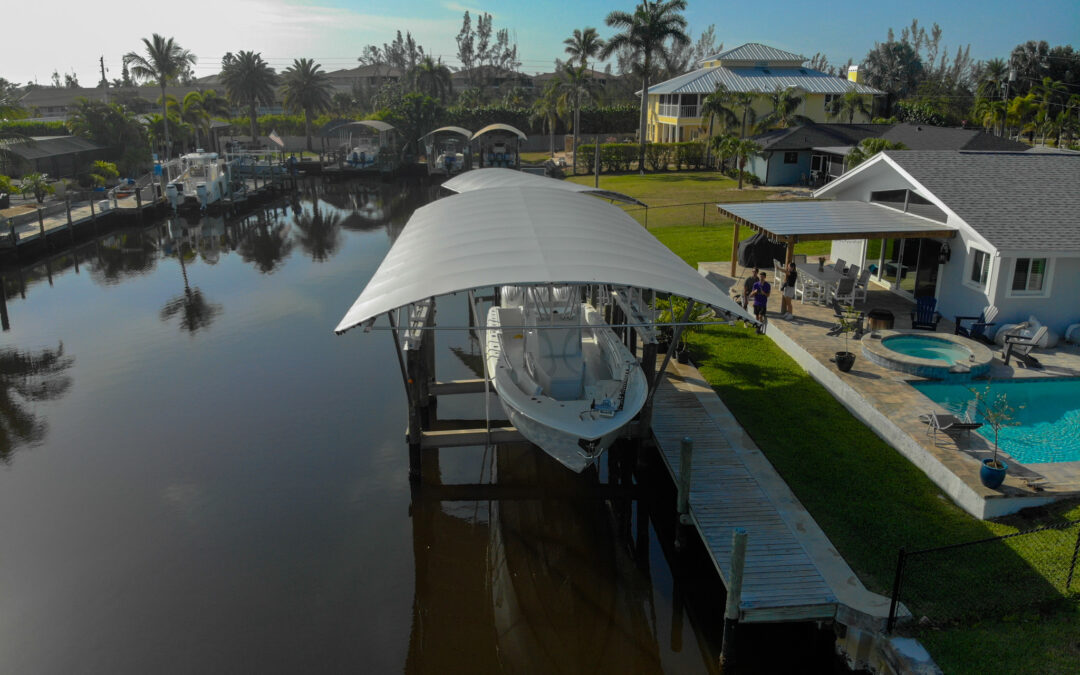
That faded, sagging canopy over your boat lift isn’t just an eyesore; it’s a warning sign. In our harsh Florida climate, a boat lift cover works hard every single day. When it starts to show its age with rips, mildew, or discoloration, it means the fabric’s protective qualities are breaking down. This leaves your boat’s expensive upholstery and sensitive electronics exposed to damaging UV rays and moisture. Acting decisively is key to preventing bigger problems. This guide simplifies the boat canopy cover replacement process, helping you identify when it’s time for an upgrade and what to look for in a quality replacement.
Key Takeaways
- Get the right fit by measuring the frame: For a secure, protective canopy, always measure the rigid metal frame of your boat lift, not the old fabric which has likely stretched over time.
- Invest in materials built for the Florida climate: Choose a high-quality, marine-grade fabric with strong UV protection to ensure your cover withstands intense sun and frequent rain, saving you from premature replacements.
- Proper installation and care extend your cover’s life: A professional installation guarantees a taut fit from the start, while simple, regular cleaning prevents mildew and wear, protecting your investment for years to come.
When Is It Time to Replace Your Boat Canopy Cover?
Your boat lift canopy is the first line of defense for your vessel, shielding it from the harsh Florida sun, heavy rains, and wind-blown debris. But like any hardworking piece of equipment, it has a lifespan. Knowing when to replace your canopy cover isn’t just about aesthetics; it’s about ensuring your boat gets the protection it needs. Letting a worn-out cover go for too long can lead to damage to your boat’s interior, finish, and equipment. So, how do you know when it’s time for an upgrade? It starts with understanding what kind of cover you have and then looking for a few key signs of wear and tear.
Understanding Canopy Cover Types
Before you can spot the signs of a failing cover, it helps to know what type you’re working with. Generally, boat lift covers fall into three categories: generic, OEM (Original Equipment Manufacturer), and custom. Generic covers are one-size-fits-all solutions that often lack a snug fit, while OEM covers are made by the lift manufacturer. Custom covers, however, are crafted to the exact specifications of your boat lift. This tailored fit provides superior protection and durability. Understanding the different styles available helps you recognize that a high-quality, custom-fit canopy will naturally have a longer, more effective life than a generic alternative.
Key Signs You Need a Replacement
Even the best canopy cover will eventually show its age, especially under the intense Southwest Florida sun. If you spot any of these red flags, it’s a clear signal that your cover’s structural integrity is compromised and a replacement is in order. Look for noticeable tears, rips, or holes. Even a small puncture can quickly expand and leave your boat vulnerable. Another major sign is significant fading or discoloration, which indicates the fabric’s UV-protective coating is breaking down. You should also check for a loss of waterproofing. If water soaks through instead of beading up and rolling off, the cover is no longer doing its job. Finally, persistent mold or mildew that returns after cleaning suggests the fabric is retaining moisture and starting to deteriorate from the inside out. If you’re seeing these issues, it’s time to get a free estimate for a new cover.
How to Measure for a New Canopy Cover
Getting the right fit for your new canopy cover starts with one crucial step: accurate measurements. A cover that’s too loose can flap in the wind, collect rainwater, and fail to protect your boat, while one that’s too tight can be impossible to install and may tear under stress. Taking a few extra minutes to measure correctly ensures your investment is secure and your boat stays protected. Think of it as creating a custom-tailored suit for your boat lift. Let’s walk through exactly how to get the precise numbers you need for a perfect, long-lasting fit.
The Essential Measurements to Take
To get a perfectly fitted canopy, you’ll need to measure the metal frame of your boat lift, not your old, stretched-out fabric. First, find the length by measuring along the side of the frame from the outside edge of the front to the outside edge of the back. Next, determine the width by measuring between the inside edges of the frame. It’s also helpful to note the shape of your canopy frame, as different canopy styles require specific cuts. Taking these precise measurements ensures your new cover will be taut and secure, providing the best possible protection from the elements.
Tools for an Accurate Measurement
You don’t need a complicated toolkit to get the job done right. All you really need is a reliable tape measure (at least 25 feet long), a notepad and pen to jot down the numbers, and a sturdy ladder. We also highly recommend calling a friend to help. As the team at Boat Lift and Canopy points out, installing a cover is often a two-person job, and the same goes for measuring. Having an extra set of hands makes it much easier to hold the tape measure straight and taut across the full length of the frame, preventing sags that can lead to inaccurate readings.
Common Measuring Mistakes to Avoid
A cover that doesn’t fit properly is more than just an eyesore; it can lead to serious problems. If the cover is loose, water and debris will pool on top and eventually find their way into your boat. The most common mistake is measuring the old canopy instead of the frame. Fabric stretches over time, so those numbers won’t be accurate. Always measure the rigid frame for a true fit. Also, avoid guessing or rounding your measurements, and be sure to double-check everything before placing your order. If you’re feeling unsure, it’s always best to ask for help. We offer a free estimate to ensure your measurements are spot-on.
Choosing the Best Materials for Your Canopy Cover
Your boat canopy is your vessel’s first line of defense against the elements, especially here in sunny Southwest Florida. Choosing the right materials isn’t just about looks; it’s about getting long-lasting protection from intense sun, heavy rain, and salty air. A high-quality cover is an investment in your boat’s longevity, preventing damage that can be costly to repair. When you’re ready for a replacement, focus on three key areas: the fabric, its protective qualities, and the frame that holds it all together. Getting these three components right ensures your boat stays safe, clean, and ready for your next trip out on the water.
Durable Fabric Options
The fabric of your canopy cover does the heavy lifting, so you want something that can handle the job. Marine-grade vinyl is a popular and excellent choice because it’s incredibly durable, waterproof, and easy to clean. It holds up well against UV rays and resists mildew, which is a huge plus in our humid climate. Another fantastic option is solution-dyed acrylic or polyester canvas. These fabrics are known for their strength and resistance to fading, so your cover will look great for years. When you explore different canopy styles, you’ll see how these materials can be tailored to provide a tough, protective barrier for your boat.
Why UV Protection and Waterproofing Matter
A canopy cover needs to do more than just keep your boat dry. In Florida, relentless sun exposure can fade your boat’s gelcoat, crack upholstery, and damage sensitive electronics. That’s why a fabric with built-in UV protection is non-negotiable. It acts like a powerful sunblock for your boat. At the same time, the cover must be completely waterproof to prevent rain from pooling and causing damage. A quality cover should also be breathable. This allows moisture and condensation to escape, preventing mold and mildew from growing underneath and keeping your boat fresh and clean.
Selecting Quality Frames and Hardware
The best fabric in the world won’t do much good without a sturdy frame to support it. The frame is the skeleton of your canopy, and it needs to be strong enough to handle heavy downpours and high winds. Look for frames made from marine-grade aluminum, which is lightweight yet incredibly strong and resistant to rust and corrosion from the salt air. The hardware, including fasteners, bolts, and cables, should also be made from high-quality, corrosion-resistant materials like stainless steel. A well-built frame ensures your canopy remains taut and secure, ready to withstand strong winds and protect your investment.
Custom vs. Standard: Which Cover Is Right for You?
Choosing between a custom-made canopy cover and a standard, off-the-shelf option is a key decision in your replacement journey. While both have their place, the right choice depends on your specific needs, your boat, and how much protection you’re looking for. A standard cover might seem like an easy fix, but a custom solution is often the better long-term investment for keeping your boat safe from the harsh Florida elements. Let’s look at the pros and cons of each so you can make a confident decision.
The Advantages of a Custom Fit
Think of a custom cover as a tailored suit for your boat. It’s designed to fit every curve and angle perfectly. This snug fit is crucial because it prevents water and debris from pooling on top, which can lead to sagging, damage, and unwanted messes inside your boat. A tailor fit cover is engineered to shed water effectively, keeping your vessel clean and dry. If you’re looking for the best possible protection that will last for years, a custom cover is a smart investment in your boat’s longevity and your own peace of mind.
When a Standard Size Makes Sense
Standard or “semi-custom” covers are the off-the-rack option. They are designed to fit a range of boat models, which makes them a convenient and often more affordable choice upfront. If you need a cover quickly or have a common boat size, a semi-custom boat cover can be a practical solution. However, keep in mind that this convenience can come with trade-offs. Because they aren’t made for your specific boat, the fit won’t be as precise, potentially leaving gaps for the elements to sneak in. They are a workable option but may not offer the same level of long-term protection as a custom-made canopy.
Common Myths About Canopy Fit
One of the biggest myths is that a boat cover should be completely airtight and waterproof. In reality, a good cover needs to breathe moisture out to prevent mold and mildew from growing underneath. It should be water-repellent, not a plastic seal. Another misconception is that “close enough” is good enough for fit. Even a slightly loose cover can allow wind to get underneath, causing flapping that can damage the fabric and your boat’s finish. A poor fit also invites pooling water, which can stretch the material and eventually find its way into your boat, defeating the cover’s purpose entirely.
Understanding the Cost of a Replacement Canopy Cover
When you start shopping for a new boat lift canopy cover, you’ll quickly see that prices can vary quite a bit. It’s more than just picking a color; the cost reflects the quality of materials, the precision of the fit, and the durability you can expect. Think of it as an investment in protecting your boat from the harsh Florida sun and unpredictable weather. A cheaper cover might save you money upfront, but it could cost you more in the long run through damage to your boat or the need for a premature replacement.
The main factors that determine the price are the type of cover, the materials used, and whether you choose a standard or custom-fit option. A generic, one-size-fits-all cover will have a very different price tag than a cover that’s custom-made for your specific boat lift. Understanding these differences will help you make a smart choice that balances your budget with the level of protection your boat deserves. Let’s break down what goes into the cost so you can feel confident in your decision.
How Type and Material Affect Price
The type of cover you choose is one of the biggest factors in its price. Generic covers are the most affordable, often running between $50 and $150. However, they are designed to fit a wide range of boats, which usually means they don’t fit any single boat perfectly. This poor fit, combined with cheaper materials, can leave your boat exposed. A step up from that are OEM (Original Equipment Manufacturer) covers, which can range from $300 to over $1,000. While they offer better quality, they still might not provide the perfect, snug fit you need for complete protection. The different types of boat covers available each come with their own trade-offs in quality and longevity.
The Cost Difference: Custom vs. Standard
For the best possible protection, a custom cover is the way to go. While a custom cover for a standard 24-foot boat can range from $800 to $1,800, that price reflects a product made specifically for your boat lift’s dimensions. This perfect fit means no sagging, pooling water, or flapping in the wind, which prevents wear and tear on both the cover and your boat. Unlike standard covers that leave gaps, a custom solution provides complete coverage. You can see the difference a tailored fit makes in our project gallery. Investing in a custom cover ensures your boat gets the superior, long-term protection it needs.
Factoring in Installation and Long-Term Value
The price of the cover isn’t the final number to consider. Proper installation is critical to getting the most out of your investment. A well-installed cover will withstand high winds and heavy rain, extending its lifespan and safeguarding your boat. This is especially important in Southwest Florida, where having a solid hurricane protocol is essential. While you might save a little by installing it yourself, professional installation guarantees it’s done right. A high-quality, professionally installed custom cover may cost more initially, but its durability and superior protection provide the best long-term value, saving you from costly repairs and frequent replacements down the road.
What to Look for in a Canopy Cover Provider
Choosing a new canopy cover is a big decision, but finding the right company to buy it from is just as important. The provider you choose can make all the difference between a smooth, successful purchase and a frustrating ordeal. You want a partner who not only sells a great product but also stands behind their work with excellent service and a solid reputation. Think of it this way: you’re not just buying a cover; you’re investing in the protection of your boat. A great provider will guide you to the right materials, ensure a perfect fit, and be there to answer your questions along the way. When you start your search, keep an eye out for a few key qualities that separate the best from the rest.
Quality Craftsmanship and Materials
Your boat lift cover is your vessel’s first line of defense against the harsh Florida sun and unpredictable weather, so quality is non-negotiable. Look for a provider that uses marine-grade materials designed to last. The fabric should offer UV protection and be water-resistant yet breathable to prevent moisture and mildew from getting trapped underneath. The frame and hardware should be just as durable, built to withstand strong winds and salty air. A company that takes pride in its canopy styles and construction methods will be transparent about the materials they use, ensuring you get a product that’s built for the long haul.
Excellent Customer Service and Support
Have you ever had a question about a product and couldn’t get a real person on the phone? It’s incredibly frustrating. A top-notch canopy provider will have a knowledgeable team ready to help. They should be able to walk you through measuring your lift, explain the differences between fabric options, and help you choose the perfect cover for your specific needs. Great customer service means you feel supported throughout the entire process, from getting an initial quote to the final installation. A company that offers a free estimate is a good sign they’re confident in their service and ready to earn your business.
A Strong Local Reputation
When it comes to something as important as protecting your boat, a company’s reputation speaks volumes. Look for a provider with deep roots in the Southwest Florida community and a long list of happy customers. A strong local presence often means they understand the specific challenges of our climate and have a track record of delivering reliable products and services. Check out their online customer reviews and see what other boat owners in your area are saying. A provider with years of experience and positive feedback is a safe bet for a high-quality canopy cover and a great customer experience.
How to Install Your New Canopy Cover
You’ve done the research, taken the measurements, and now your brand-new canopy cover is ready to go. The final step is installation. Getting this part right is key to making sure your cover provides the best protection for your boat and lasts as long as possible. A properly secured canopy not only shields your vessel from the harsh Florida sun and rain but also maintains the clean, sharp look of your dock area.
While installing a large piece of fabric over a metal frame can seem like a big task, it’s very doable with the right approach. We’ll walk you through everything you need to know, from pre-installation prep to the final tensioning. Whether you’re a seasoned DIYer or considering professional help, these guidelines will help you understand what a quality installation involves. A snug, secure fit prevents wind damage and ensures water runs off correctly, extending the life of both your cover and your boat’s finish.
Your Pre-Installation Checklist
Before you unroll that new cover, a little prep work will make the entire process smoother and safer. First, call a friend for help. Installing a boat lift canopy is a two-person job, and having an extra set of hands is non-negotiable for both safety and efficiency. Next, gather your supplies: the new cover, all the included bungee attachments, and a sturdy ladder. It’s also wise to review any specific guidelines from the manufacturer. Finally, check the weather forecast. A calm, clear day is ideal, as wind can turn your canopy into a giant sail, making installation difficult and dangerous.
A Step-by-Step Installation Guide
With your helper by your side, start by unrolling the canopy cover on the ground and orienting it correctly. Most covers have tags indicating the top and bottom. Begin by attaching one of the shorter ends of the canopy completely to the frame using the bungee fasteners. Once one side is secure, carefully pull the rest of the cover over the top of the frame. With one person on each side, work your way down the length of the frame, attaching the bungees as you go. The goal is to create even tension across the entire surface. The cover should be taut to avoid any pockets where water could collect.
DIY vs. Professional Installation: Making the Call
Many boat owners are hands-on and prefer to tackle projects themselves. If you have a helper and are comfortable working on a ladder, a DIY installation is certainly possible. However, even with a lightweight cover, folding and maneuvering a large canopy can be challenging. An improper installation can lead to premature wear, pooling water, or wind damage, which can be costly down the line.
For a perfect fit and complete peace of mind, professional installation is your best bet. Our experienced team has the right equipment and techniques to install your cover quickly and securely. If you’re in one of our service areas, we’d be happy to handle the installation for you. You can always request a free estimate to see how we can help.
Common Replacement Mistakes to Avoid
Replacing your boat canopy cover is an investment in protecting your boat, so you want to get it right the first time. A new cover can last for years, but a few simple missteps during the replacement process can lead to a poor fit, premature wear, and potential damage to your vessel. By being aware of the most common mistakes boat owners make, you can ensure your new canopy provides the best possible protection.
From getting the measurements wrong to choosing a material that can’t handle the Florida sun, these errors are easy to make but also easy to avoid. Taking a little extra time to plan your replacement will pay off in the long run, giving you peace of mind and saving you from the frustration of a cover that just doesn’t work. Let’s walk through the key mistakes to sidestep so your investment is a smart one.
Inaccurate Measurements
Getting the measurements right is the most critical step in replacing your canopy cover. A cover that is too loose will flap in the wind, causing it to wear out quickly, while one that is too tight will strain the seams and frame. More importantly, an improper fit allows water and debris to pool on the surface, which can lead to stretching, mildew, and eventually, damage to your boat. A well-designed cover should be taut and angled to shed rain effectively. If you’re not confident in your ability to measure correctly, it’s always best to ask for professional help. We can ensure a perfect fit by handling the measurements for you when you request a free estimate.
Choosing the Wrong Material
It can be tempting to choose a less expensive material to save a few dollars, but this is almost always a mistake. Your boat lift cover is your boat’s first line of defense against the elements, especially the intense Southwest Florida sun. Sun exposure is a leading cause of cover failure. Investing in a high-quality, marine-grade fabric with excellent UV resistance and waterproofing is essential for longevity. Cheaper materials will quickly fade, crack, and lose their ability to protect your boat, forcing you to buy a replacement much sooner. Take a look at the different styles and materials available to find a durable option that will stand up to the local climate and keep your boat safe.
Skipping Proper Installation and Maintenance
Even the highest-quality canopy cover won’t perform well if it isn’t installed and maintained correctly. Proper installation ensures the cover is secured tightly to the frame, preventing it from catching wind or sagging. A loose cover can be damaged during a storm and won’t protect your boat effectively. Once installed, regular maintenance is key. This includes periodically checking the tension, cleaning off debris like leaves and bird droppings, and making sure water isn’t pooling anywhere. Following a proper securing procedure, like our hurricane protocol, is especially important for protecting your investment during severe weather. A little attention goes a long way in extending the life of your cover.
How to Make Your New Canopy Cover Last
You’ve invested in a high-quality canopy cover to protect your boat, and with the right care, it can serve you well for years. A little proactive maintenance goes a long way in preserving the fabric, color, and structural integrity of your cover. Think of it like sunscreen for your boat; consistent application is key. By establishing a few simple routines for cleaning, seasonal upkeep, and storage, you can extend the life of your canopy and ensure it continues to look great and perform perfectly, season after season. These steps will help you protect your investment from the harsh Florida sun and weather.
Simple Cleaning and Care Routines
Keeping your canopy cover clean is one of the easiest ways to prolong its life. A gentle wash every month or so can prevent dirt, bird droppings, and mildew from setting in. When you clean, be sure to avoid harsh chemicals or abrasive scrubbers, as these can damage the fabric’s protective coating. A simple solution of mild soap and water with a soft-bristled brush is all you need.
Beyond washing, make a habit of performing regular inspections. Once a week, or after any heavy weather, take a quick walk around your boat lift. Look for any small tears, loose threads, or areas where tension might be uneven. Catching these minor issues early can prevent them from turning into major problems that require a full replacement. A well-maintained cover not only looks better but also provides superior protection for your boat. You can see examples of pristine covers in our gallery.
Essential Seasonal Maintenance
Living in Southwest Florida means your canopy is exposed to intense sun and seasonal storms. To keep it in top shape, a few seasonal checks are crucial. One of the most important things to watch for is water pooling on the surface after it rains. This extra weight can stretch the fabric and strain the frame over time. If you notice puddles forming, your cover may need to be tightened. A properly tensioned canopy allows water to run right off.
Before hurricane season arrives, it’s also a good idea to inspect the entire lift system, including any pulleys or winches that operate the canopy. Ensure all mechanical parts are working smoothly. Taking these steps is part of being a prepared boat owner in our area. For more detailed information on storm readiness, you can review our hurricane protocol.
Smart Storage Tips for the Off-Season
If you plan to store your boat or remove your canopy for an extended period, proper storage is key to preventing damage. The golden rule is to never, ever fold and store a canopy while it’s damp. Trapped moisture is a perfect breeding ground for mold and mildew, which can permanently stain and weaken the fabric. Before you pack it away, make sure the cover is completely clean and bone-dry.
Once it’s clean and dry, fold it neatly to avoid creating hard creases. Store it in a dry, temperature-controlled location like a garage or closet, away from direct sunlight and pests. Taking these extra few minutes before storing your cover will ensure it’s in perfect condition when you’re ready to use it again. If you find your old cover is past its prime, you can always get a free estimate for a new one.
Related Articles
- 2025 SWFL Boat Lift Canopy Buyer’s Guide: Frames & Fabrics
- Boat Lift Canopy Frame Styles | Coastline Boat Lift Covers
- Florida Canopies – Coastline Boat Lift Covers
Frequently Asked Questions
How long should a new boat lift canopy last? The lifespan of your canopy cover really depends on the quality of the material and how well you maintain it. A high-quality, marine-grade cover that is regularly cleaned and kept properly tensioned can easily last seven to ten years, sometimes even longer. Cheaper, lower-quality materials might only give you a few seasons of solid protection before the Florida sun takes its toll.
Is a custom-fit cover really worth the extra cost? In my experience, absolutely. While a standard cover might save you some money initially, a custom cover is a smarter long-term investment. The perfect, snug fit prevents water from pooling, which can stretch and damage the fabric. It also stops the wind from getting underneath and causing flapping that wears out the material and can even scuff your boat’s finish.
What’s the best material for a canopy cover in the Florida climate? Both marine-grade vinyl and solution-dyed fabrics are excellent choices for our sunny, humid climate. Vinyl is incredibly durable, waterproof, and very easy to clean, making it a fantastic all-around performer. Solution-dyed fabrics, like acrylic or polyester canvas, are champions at resisting fading, so they hold their color beautifully under the intense sun. The best choice really comes down to your specific priorities for durability and appearance.
Can I install the new canopy cover myself? You certainly can, especially if you’re comfortable on a ladder and have a friend to help you. However, it’s a bigger job than it looks. Getting the tension just right across the entire frame is crucial for performance and longevity. If the cover is too loose, it will collect water and flap in the wind. For a guaranteed perfect and secure fit, professional installation is always the safest bet.
What is the most important thing I can do to make my new cover last? The two most important habits are keeping it clean and checking the tension. Regularly rinsing off dirt, leaves, and bird droppings prevents mildew and staining. Just as important, you should periodically check that the cover is taut. A tight canopy sheds rain properly and stands up to wind, which prevents the most common causes of premature wear and tear.