

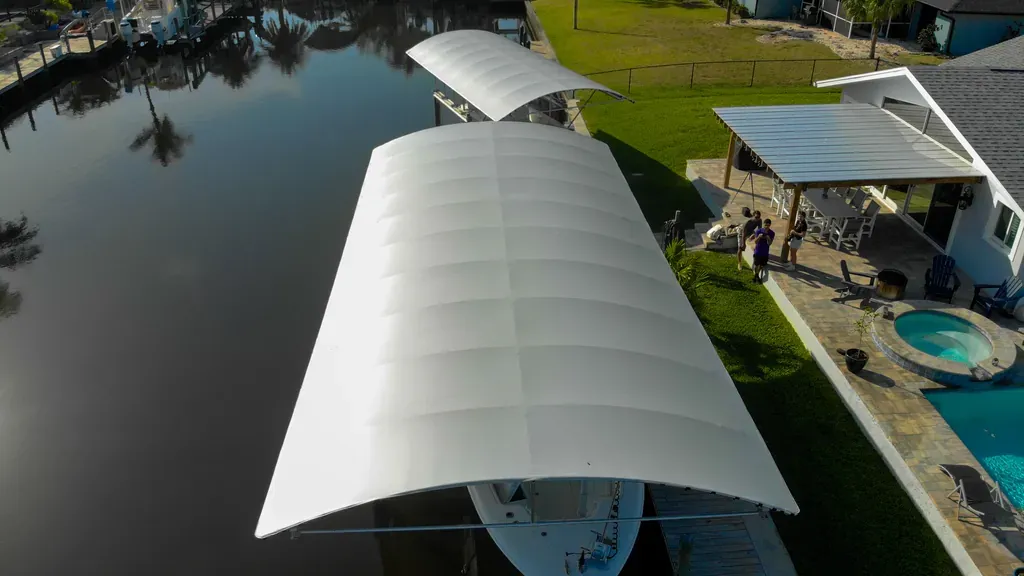
Boat Lift and Canopy Setup: A First-Time Buyer’s Guide
A boat lift and canopy can feel like a big first purchase because it is part equipment, part construction project, and part long-term protection plan for your boat. If you are a new waterfront homeowner or a first-time boat owner in Florida, the goal is simple: keep your boat lifted, shaded, dry, and easier to maintain without guessing your way through frame styles, fabric choices, measurements, and storm preparation.
Request a free estimate from Coastline Boat Lift Covers to get professional guidance for your dock, boat, and lift setup.
This guide explains what a boat lift with canopy includes, why canopy design matters so much in Florida, how the setup process works, and what to ask before you approve a quote. It is written for buyers who want a clear starting point before speaking with an installer.
What Is Included in a Boat Lift and Canopy System?
A boat lift and canopy system is made up of several parts that work together. The lift raises the boat out of the water. The canopy frame creates the structure above the lift. The fabric cover stretches over that frame to shield the boat from sun, rain, debris, and bird droppings. Hardware, straps, uprights, fasteners, and tensioning parts keep the system secure and properly aligned.
Many first-time buyers think only about the fabric color or the visible cover. In practice, the frame underneath is just as important. A strong frame helps the cover hold its shape, reduces fabric movement in wind, and supports better drainage during heavy rain. The wrong frame or a poorly fitted cover can lead to sagging, flapping, water pooling, and faster wear.
A complete boat lift with cover usually involves these elements:
- Canopy frame: The aluminum structure that sits over the lift and supports the cover.
- Uprights and supports: Vertical and angled components that connect the frame to the lift or dock structure.
- Marine fabric: The waterproof, UV-resistant canopy material that protects the boat.
- Thread and stitching: The seams that hold the cover together under sun, wind, and rain exposure.
- Straps, bungees, and hardware: The parts that maintain tension and help the fabric stay secure.
- Custom measurements: The dimensions that determine fit, clearance, overhang, and coverage.
- Professional installation: The setup work that makes the system safe, aligned, and ready for use.
For buyers comparing options, the best system is not always the cheapest or the most basic. It is the one sized for the boat, matched to the dock, and built for the local conditions where it will sit every day.
Why Florida Boat Owners Need More Than Basic Shade
Florida is hard on boats. UV exposure fades upholstery, dries out vinyl, and heats interior surfaces. Afternoon rain can soak uncovered seats and create mildew problems. Salt air speeds up corrosion. During hurricane season, wind and flying debris can turn weak canopy systems into a liability.
A boat lift canopy is not only about comfort when you step onto the dock. It helps protect the expensive parts of the boat that sit exposed while the boat is stored. Upholstery, electronics, gelcoat, flooring, covers, and hardware all benefit from less direct sun and less standing moisture.
Florida buyers should look for a canopy that accounts for four local realities:
- High UV exposure: The cover fabric needs strong sun resistance, not just basic water resistance.
- Heavy rain: The frame shape and fabric tension should help water shed instead of pool.
- Coastal wind: Stronger framing and secure connection points matter on open canals, bays, and exposed waterfront lots.
- Storm planning: The canopy should fit into a clear hurricane preparation plan before named storms arrive.
Coastline Boat Lift Covers builds for these conditions from its Fort Myers operation, using marine-grade materials and custom measurements for Florida waterfront properties. For more detail on local conditions, see the guide to boat lift covers in Florida.
Step 1: Tell the Installer About Your Boat Lift
The setup process should begin with a conversation, not a generic online order. A good installer needs to understand what you own, where the lift sits, and what you want the canopy to accomplish. Before requesting a quote, gather a few basics so the first discussion is productive.
Helpful details include:
- The type and size of your boat
- The width and length of your existing lift
- Whether the dock is on a canal, bay, river, lake, or open-water location
- Any HOA color or design requirements
- Whether you want extra dock shade or only direct boat coverage
- Access constraints for installation crews
- Any storm damage, corrosion, or worn parts on the current lift
You do not need to know every technical measurement before you call. In fact, professional measurement is one of the most important parts of the process. The first conversation should help the installer decide what needs to be inspected on site and which frame styles may make sense.
Coastline’s process starts with learning about the boat lift, then sending trained technicians to measure before preparing a custom quote. That matters because small differences in beam width, lift height, motor placement, roof angle, and dock clearance can affect the final fit.
Step 2: Choose the Right Canopy Frame Style
The frame style affects coverage, strength, appearance, and usable dock space. A first-time buyer does not need to memorize every technical detail, but it helps to understand why different frames exist.
Coastline offers several boat lift canopy frame styles for different dock layouts and protection goals. The right option depends on how much shade you want, how exposed your waterfront is, and whether your boat needs extra clearance.
Dominica with I-beam
The Dominica with I-beam is designed for maximum strength and durability. It is a strong choice for buyers who want added wind resistance and extra dock shade for cleaning, loading, and maintenance.
Cayman
The Cayman is a versatile option for boats without tops or for situations where space needs to be used carefully. It can be built with or without I-beam support depending on the application.
Barbados
The Barbados uses a traditional V shape and can include a 12 to 30 inch overhang. This style works well when the buyer wants a classic canopy look with extended coverage.
Antigua
The Antigua is built for direct coverage without extra overhang. Drop-down sides can help shield the boat and dock in tighter spaces where a larger profile is not ideal.
For Florida buyers, frame strength should not be an afterthought. Coastline’s I-beam option is a key differentiator because the frame is the backbone of the system. Stronger construction helps the canopy hold up better through daily weather, seasonal wind, and long-term use.
Step 3: Select Fabric, Thread, and Color
The fabric is what most people see first, but it does more than complete the look of the dock. It blocks sun, sheds rain, resists mildew, and helps control heat inside the boat. In Florida, a standard shade fabric is not enough. The material needs to be made for marine exposure.
Coastline uses Patio 500 vinyl-laminated polyester fabric for its boat lift covers. This material is waterproof, UV-resistant, heat-reflective, tear resistant, mildew resistant, and designed for easy cleaning with soap and water. The company also uses GORE TENARA thread, which is valued in marine applications because stitching is often one of the first weak points on lower-quality covers.
Color matters too. A canopy color should fit the home, dock, HOA requirements, and personal preference. Lighter colors can help reflect heat, while darker colors may better match certain homes or dock finishes. Coastline offers a wide range of color choices, so buyers can protect the boat without making the dock look like an afterthought.
When comparing quotes, ask what fabric is being used, what thread is used at the seams, how the fabric is tensioned, and what warranty applies to the cover. Two canopies may look similar online but perform very differently after several seasons of Florida sun and rain.
Step 4: Measure for a Custom Fit
A custom fit is one of the biggest reasons to work with a professional installer. Boat lift canopies are not one-size-fits-all products. The same boat can need different coverage depending on the lift, dock, water exposure, roof angle, and access around the slip.
Good measurement protects the buyer in several ways:
- It helps prevent fabric from sagging or flapping.
- It reduces gaps where sun and rain reach the boat.
- It allows the installer to account for motors, bunks, pilings, and dock edges.
- It improves the final appearance of the canopy.
- It helps the quote reflect the real job instead of a rough guess.
A poor fit can be expensive. Loose fabric can wear out faster. Inadequate overhang can leave parts of the boat exposed. A frame that does not match the lift can create installation challenges or limit usable dock space. For a first-time buyer, professional measurement is the difference between buying a product and getting a system designed for the property.
Not sure which measurements matter? Start with a free estimate so Coastline can review your lift and recommend the right setup.
Step 5: Review the Quote, Warranty, and Installation Plan
Because boat lift canopies are custom, most reputable providers use a quote process instead of flat online pricing. That is normal. Frame style, size, fabric, site access, installation requirements, and special conditions can all affect the final cost.
A good quote should make the scope clear. Before approving it, review what is included and what is not included. Ask whether the price includes measurement, fabrication, installation, hardware, old canopy removal if needed, and any service after installation.
Warranty coverage is also important. Coastline offers a 10-year frame warranty, a 5-year canopy warranty, and a lifetime stitching guarantee. For a Florida waterfront property, that level of coverage matters because the system faces sun, salt air, rain, and wind year after year.
Before installation day, confirm these details:
- Which frame style will be installed
- Whether I-beam reinforcement is included
- The selected fabric color
- The expected installation timeline
- Any dock access requirements
- What the crew needs moved before arrival
- How the finished canopy will be inspected
A clear installation plan reduces surprises and helps the buyer understand what will happen from the first measurement to the final walkthrough.
How Should a Boat Lift Canopy Be Handled During Hurricane Season?
A canopy that protects the boat during normal weather should not be treated as a hurricane shield. When a major storm threatens, the fabric can catch wind like a sail. That stress can damage the fabric, frame, lift, or dock. First-time buyers should ask about hurricane preparation before the first storm is in the forecast.
In many cases, the safest plan is to remove the canopy fabric before hurricane-force winds arrive, store it properly, and reinstall it after the threat has passed. Waiting until a named storm is close can make scheduling harder and more expensive because many boat owners need help at the same time.
Coastline offers a Hurricane Protocol service that lets customers pre-book canopy removal and reinstallation before the season becomes urgent. That gives owners a plan instead of a scramble. The service can include removal, storage, reinstallation, and related maintenance such as bungee replacement.
New buyers should also learn basic seasonal care. Keeping straps, bungees, seams, and hardware in good shape can extend the life of the system. Coastline’s seasonal boat lift cover care guidance is a helpful next step for owners who want to protect the investment after installation.
Common Mistakes First-Time Buyers Should Avoid
The best time to avoid mistakes is before the quote is approved. Many canopy problems start with rushed decisions, incomplete measurements, or a focus on price without understanding the materials and service behind the system.
Choosing a canopy based only on price
A low price can become expensive if the frame is weak, the fabric wears quickly, or the cover does not fit. Compare materials, warranty, installation quality, and service support along with price.
Ignoring local wind exposure
A protected canal and an open-water dock may need different levels of frame strength and storm planning. Tell the installer about the site’s exposure so the recommendation matches real conditions.
Skipping professional measurement
Guessing dimensions can lead to gaps, sagging, or poor clearance. Professional measurement helps the canopy fit the lift, not just the boat.
Forgetting about maintenance
Even a strong canopy needs occasional inspection. Check fabric tension, straps, seams, hardware, and drainage after major weather and at the start of each season.
Waiting too long before hurricane season
Storm services can book quickly. Ask about removal and reinstallation options early, especially if you are a seasonal resident or travel during summer.
Where Coastline Boat Lift Covers Fits In
Coastline Boat Lift Covers serves Florida boat owners with custom manufacturing, professional measurement, installation, repair, and seasonal services. The company has served the market since 2010 and operates from Fort Myers, with service throughout key waterfront communities in Southwest Florida and beyond.
For first-time buyers, the biggest advantage is having one team handle the process from consultation through installation. Coastline can review your lift, recommend a frame style, help select fabric, prepare a custom quote, install the canopy, and support the system through seasonal care and hurricane preparation.
If you are outside the immediate Fort Myers area, review Coastline’s service areas to see whether your waterfront property is covered. The company serves many Florida markets, including communities in Lee, Collier, Charlotte, and nearby counties.
What to Do Before Requesting Your First Quote
You do not need to become a canopy expert before asking for help. You only need to know what information will make the quote more useful. Before you contact Coastline, take a few photos of the boat, lift, dock, and surrounding area. Note any HOA requirements, preferred colors, and concerns such as wind exposure, afternoon sun, or limited dock space.
Then think through your priorities. Do you want maximum storm readiness? Extra dock shade? A traditional look? A lower-profile frame for tight spaces? A system that is easier to remove before hurricane season? These preferences help the estimator recommend the right frame and fabric combination.
A boat lift and canopy system should make boat ownership easier, not more confusing. With the right frame, the right fabric, accurate measurements, and a clear installation plan, your first canopy can protect your boat, improve your dock area, and reduce maintenance headaches for years.
Request your free estimate from Coastline Boat Lift Covers and get a custom recommendation for your boat lift, canopy frame, and Florida waterfront conditions.