

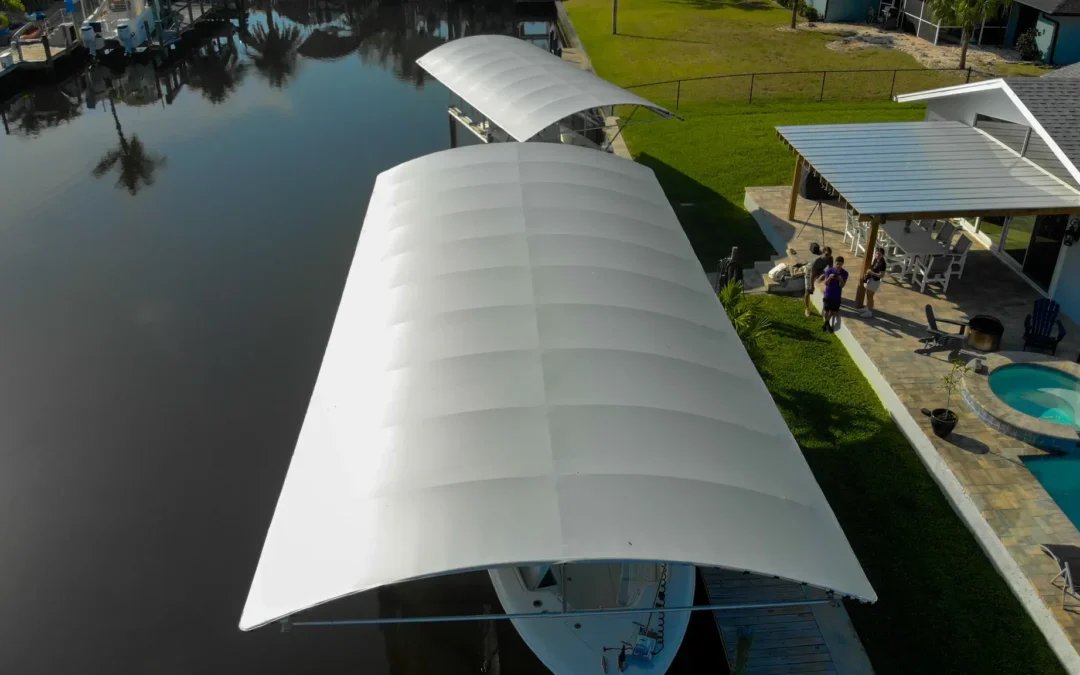
Boat Lift Canopy Frame Plans: What You Need to Know Before Building
Boat lift canopy frame plans can help you understand the shape, measurements, materials, and support requirements behind a safe cover system, but they are only the starting point. In Southwest Florida, a canopy frame has to fit the lift, clear the boat, protect the dock, handle daily sun exposure, and be ready for coastal weather. Before you build from a generic plan or order parts online, it is worth knowing what separates a workable sketch from a frame that performs year after year.
Planning a new canopy or replacement frame? Request a free estimate from Coastline Boat Lift Covers for professional measurement, frame style guidance, and installation support.
Quick Answer: What Should Boat Lift Canopy Frame Plans Include?
A complete boat lift canopy frame plan should include the lift width, lift length, boat height, dock clearance, frame shape, support leg layout, overhang, fabric attachment method, fastener specifications, and material requirements. For Florida boat owners, the plan should also account for corrosion resistance, wind exposure, sun protection, drainage, and whether the canopy needs to be removed before a storm.
The most important point is that canopy plans should be based on the actual lift and boat, not a generic online diagram. A few inches can affect how the cover sheds water, how the boat enters the lift, and whether the frame interferes with pilings, dock boards, seawalls, or boat accessories.
Why Generic Frame Plans Often Fall Short
Many DIY searches start with the same question: Can I find boat lift canopy frame plans and build the frame myself? For some simple inland applications, a kit or plan may be enough. In coastal Florida, the decision is more complicated.
A canopy frame is not just a roof shape above the boat. It is a load-bearing structure attached to a lift that sits over saltwater, brackish water, or high-humidity air. It must support the cover, keep tension even, avoid sagging, and give the boat enough clearance when raised. If the measurements are wrong, the problems usually show up after installation: loose fabric, puddling, dock interference, stress on fittings, or a cover that does not protect the full beam of the boat.
Generic plans also tend to leave out the local variables that matter most. Waterfront homes in Fort Myers, Cape Coral, Sanibel, Bonita Springs, Naples, Marco Island, and nearby areas can have different piling layouts, lift heights, seawall conditions, HOA requirements, and wind exposure. That is why Coastline begins with professional measurement before recommending a frame style.
Start With the Right Measurements
Good frame planning starts with a field measurement, not a guess. If you are comparing frame plans or talking with an installer, gather these details first.
- Lift length: The length of the lift and boat determines how far the frame needs to extend for useful bow-to-stern coverage.
- Lift width: The beam of the boat, the cradle width, and the dock layout help determine the frame width.
- Boat height: Towers, T-tops, radar arches, bimini tops, consoles, and antennas can change the required clearance.
- Raised boat position: The boat should be measured in the position where it will sit under the canopy.
- Dock clearance: Walkways, pilings, rooflines, seawalls, and nearby structures can affect leg placement and overhang.
- Maintenance space: The best frame plans leave room to clean, inspect, and access the boat without fighting the structure.
These measurements are one reason professional installation matters. A plan that looks correct on paper can still fail if it does not reflect how the boat actually sits on the lift.
Choose a Frame Style Before You Finalize the Plan
Frame shape affects coverage, clearance, appearance, and how the cover handles water. Coastline offers several boat lift canopy frame styles, each suited to a different dock and boat setup.
Dominica I-Beam
The Dominica I-Beam frame is Coastline’s strongest and most durable boat lift canopy frame option. It is designed for maximum wind resistance and provides extra dock shade, which can make cleaning and maintenance more comfortable in Florida sun. If your plan prioritizes long-term strength, large coverage, and coastal durability, this style deserves close attention.
Cayman
The Cayman frame is a versatile option for boats without tops or for applications where space needs to be managed carefully. It can be built with or without I-beam support. For homeowners dealing with no-build zones or tighter layouts, this style can help maximize protection without overcomplicating the structure.
Barbados
The Barbados frame uses a traditional V shape with a 12 to 30 inch overhang. That overhang gives the boat and dock more extended coverage while keeping a clean, classic look. It can also be customized with or without I-beam reinforcement depending on the project.
Antigua
The Antigua frame is built for direct coverage without extra overhang. Drop-down sides help shield the boat and dock, making it a practical choice for tighter areas where overhang is not ideal. Like other Coastline styles, it can be reinforced with I-beam support when added strength is needed.
Compare Frame Plan Factors by Priority
Before choosing a design, decide what the frame needs to accomplish first. A boat owner with a center console and T-top may need different clearance than a homeowner who wants extra dock shade for maintenance. The table below shows how common priorities affect planning.
| Planning Priority | What to Check | Why It Matters |
|---|---|---|
| Maximum wind resistance | Reinforcement, upright count, fastening method, frame profile | Coastal exposure can stress weak connections and light materials. |
| Boat clearance | Console height, tower height, raised lift position | The canopy must protect the boat without blocking entry or lift movement. |
| Dock shade | Overhang, frame width, maintenance access | Extra shade makes cleaning and dock work more comfortable. |
| Tight dock space | Leg placement, side clearance, no-build limits | A compact design may prevent interference with pilings or walkways. |
| Long-term appearance | Cover tension, fabric fit, color choice, frame symmetry | A well-planned system looks cleaner and reduces fabric stress. |
Material Choices Matter as Much as the Drawing
A frame plan may show the right dimensions, but the materials determine how well the finished system holds up. Coastal environments are tough on hardware. Salt air, sun, rain, humidity, and seasonal storms can expose weaknesses quickly.
Coastline uses marine-grade materials and custom fabrication for its canopy systems. The cover material is also part of the plan. Every Coastline boat lift cover is made using Patio 500 vinyl-laminated polyester fabric, a proven marine-grade material known for water resistance, UV resistance, heat reflection, tear resistance, mildew resistance, and easy cleaning with soap and water. The company also uses premium stitching and construction details designed for long-term service.
If you are evaluating a DIY plan, ask what the plan specifies for frame material, fasteners, fittings, cover fabric, thread, bungees, and attachment points. If the answer is vague, the plan is not complete enough for a Florida waterfront installation.
How Much Overhang Should a Canopy Frame Have?
There is no single right overhang for every boat lift canopy frame. Overhang depends on the boat, dock, lift, frame style, and how much coverage you want. Some homeowners want extra dock shade and extended protection. Others need a tighter, direct-coverage frame because of dock limits, pilings, property lines, or aesthetics.
For example, the Barbados style includes a 12 to 30 inch overhang for sleek extended coverage. The Antigua style is better when you want direct coverage without extra overhang. The Dominica I-Beam can provide extra feet of dock shade, which can be valuable if you often clean or service the boat on the lift.
Not sure which frame style fits your lift? Compare Coastline’s canopy frame styles or request a professional recommendation before committing to a plan.
Do DIY Boat Lift Canopy Frame Plans Save Money?
DIY frame plans can look less expensive at first, especially if you are only comparing raw material costs. The real cost depends on measurement accuracy, tools, hardware, fabrication skill, installation time, and the risk of rework. If a frame is too narrow, too low, poorly supported, or difficult to tension, the savings can disappear quickly.
Professional measurement and installation help reduce that risk. Coastline’s process starts with understanding the boat lift, then taking measurements, building a custom quote, and installing the system with trained crews. That process is designed to avoid the common mistakes that come from using a one-size-fits-all plan.
That does not mean every DIY customer is wrong to research plans. In fact, reviewing plans can help you ask better questions. The key is knowing when a sketch becomes a structural project. If the frame needs custom fabrication, significant clearance planning, or wind-ready reinforcement, professional support is usually the safer path.
Common Mistakes to Avoid When Planning a Canopy Frame
Even experienced boat owners can miss details when reviewing boat lift canopy frame plans. Watch for these common mistakes before ordering parts or starting a build.
- Measuring the boat in the wrong position: The boat should be measured as it sits on the lift, not only on a trailer or at the dock.
- Ignoring accessories: T-tops, antennas, ski towers, rod holders, and electronics can affect clearance.
- Choosing too little overhang: A frame that barely covers the boat may leave upholstery, decks, or dock areas exposed.
- Choosing too much overhang: Extra coverage can create conflicts with pilings, neighbors, or no-build zones.
- Underspecifying materials: Light-duty fittings and non-marine components do not belong in a coastal canopy system.
- Forgetting storm planning: In Florida, owners should understand how the canopy will be handled before hurricane season.
What About Hurricane Season?
A canopy frame and cover should be planned with storm season in mind. Boat lift covers protect against sun, rain, and everyday weather, but hurricanes create a different set of risks. Homeowners should know whether their canopy needs removal before a major storm and how that process will be handled.
Coastline offers a Hurricane Protocol service to help boat owners prepare before storm season. This service is especially valuable for seasonal residents, busy homeowners, and anyone who does not want to handle canopy removal and reinstallation alone. If you are choosing frame plans, ask how the design affects removal, reinstallation, fabric tensioning, and future service.
When Professional Measurement Is the Better Plan
The best boat lift canopy frame plans are the ones that start with the real site. Professional measurement helps answer questions that a generic drawing cannot.
- Will the frame clear the boat when the lift is fully raised?
- Will the canopy interfere with the dock, pilings, seawall, or nearby structures?
- Which frame style gives the best balance of shade, strength, and appearance?
- Should the project include I-beam reinforcement?
- How should the cover attach so it stays properly tensioned?
- What should the owner do before hurricane season?
These answers are hard to get from a downloaded plan. They require looking at the lift, boat, dock, and site together. That is why Coastline’s free estimate process is built around professional measurement and a custom quote rather than guesswork.
How Coastline Turns a Frame Plan Into a Finished System
Coastline Boat Lift Covers manufactures and installs custom boat lift canopy systems from its Fort Myers base. The company has served Florida boat owners since 2010 and combines frame design, custom cover fabrication, professional installation, maintenance, repairs, and hurricane support.
The process is straightforward. First, you tell the team about your boat lift. Next, trained technicians take professional measurements. Then Coastline prepares a custom quote based on the frame style, fabric choice, and installation requirements. Finally, the installation crew builds and secures the system so the boat and dock are protected.
That full-service approach is especially useful when you are comparing plans. You can still understand the design, ask informed questions, and choose the right style, but you are not left alone to solve structural, fit, and installation details.
Final Checklist Before You Build or Buy
Before moving forward with any boat lift canopy frame plan, review this checklist.
- Confirm the lift length, lift width, and raised boat height.
- Account for towers, tops, electronics, and accessories.
- Choose a frame style that fits your dock layout and coverage goals.
- Decide whether I-beam reinforcement is appropriate.
- Specify marine-grade materials, hardware, fabric, and stitching.
- Check overhang against pilings, walkways, property limits, and no-build zones.
- Plan for fabric tension, drainage, maintenance access, and storm season.
- Get professional measurement before ordering custom parts or fabrication.
Ready to move from research to a reliable custom canopy? Get a free estimate from Coastline Boat Lift Covers and let the team measure your lift, recommend the right frame style, and build a system for your boat and dock.
The Bottom Line
Boat lift canopy frame plans are useful for understanding the project, but they should not replace accurate measurement, marine-grade materials, and expert installation. The right frame protects your boat, improves dock comfort, supports the cover properly, and fits the way you use your waterfront space.
If you are in Southwest Florida or planning a custom boat lift cover, Coastline can help you compare Dominica I-Beam, Cayman, Barbados, and Antigua frame options, then turn the right plan into a finished canopy system built for coastal conditions.