
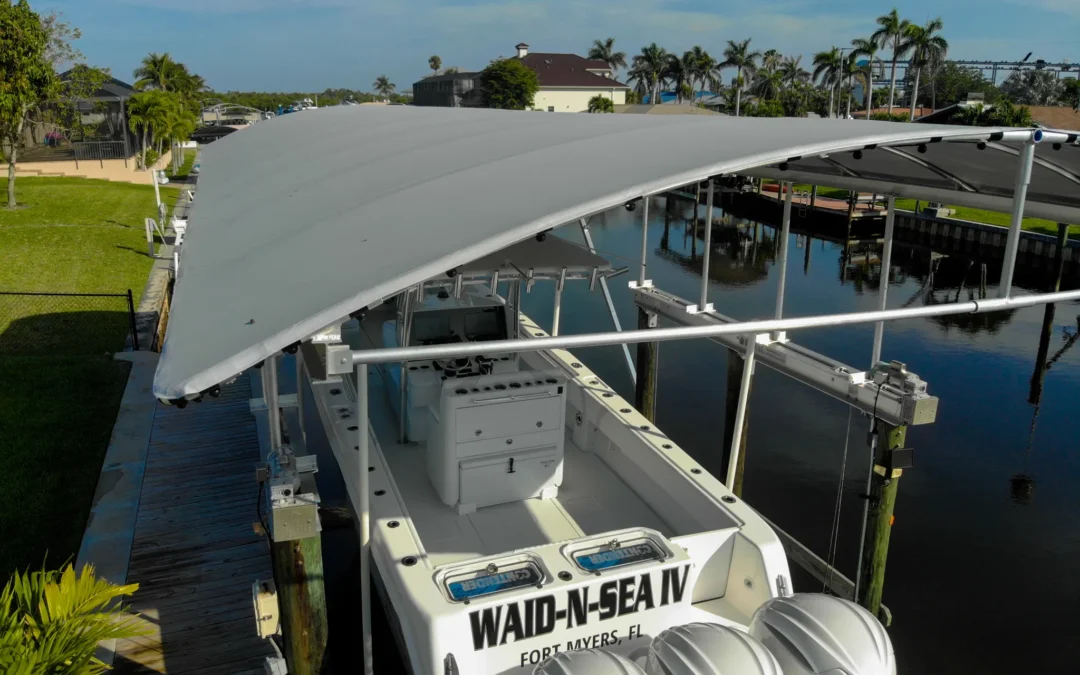
Hurricane Season Boat Lift Checklist for Florida Boat Owners
A hurricane season boat lift checklist should help you make decisions before a storm is named, not while the forecast cone is already moving toward your canal. In Southwest Florida, that means inspecting the lift frame, checking the canopy fabric and bungees, documenting the boat and lift, reserving canopy removal early, and knowing what to look for after the storm passes.
Need help before the next named storm? Reserve your spot with Coastline’s Hurricane Protocol so your canopy removal plan is handled before requests spike.
This checklist is written for waterfront homeowners in Fort Myers, Cape Coral, Bonita Springs, Naples, Punta Gorda, Port Charlotte, Marco Island, and nearby coastal communities. It focuses on the boat lift cover and canopy system, especially the parts that can turn into expensive problems when wind, rain, and storm surge arrive together.
Quick Answer: What Should Be on a Boat Lift Hurricane Checklist?
A boat lift hurricane checklist should include a pre-season frame inspection, canopy fabric and bungee inspection, photo documentation, insurance review, professional canopy removal plan, active storm monitoring process, post-storm safety check, and a repair or reinstallation plan. The most important step is booking canopy removal before a named storm creates last-minute demand.
Use the checklist below as a practical timeline. If your canopy is already showing torn fabric, loose bungees, bent frame sections, or rusted hardware, move those items to the top of the list and schedule service before storm activity increases.
1. Start With a Pre-Season Frame Inspection
The best time to inspect a boat lift frame is before hurricane season begins on June 1. A frame that looks fine from the dock can still have hidden stress at connection points, fasteners, welds, and support areas. Wind loads do not forgive weak spots, especially on a canopy system that has been exposed to salt air, UV, rain, and daily heat for years.
Walk the dock when conditions are dry and calm. Look at the canopy frame from multiple angles, including from the side, the dock, and the boat if it is safe to do so. You are looking for changes that suggest the structure is no longer square, stable, or evenly supported.
- Check uprights and supports: Look for leaning, twisting, loose bolts, or uneven spacing.
- Inspect frame connections: Pay attention to brackets, seams, corner hardware, and any signs of movement.
- Look for corrosion: Surface oxidation may be normal in coastal environments, but deep corrosion around hardware needs attention.
- Watch for bent sections: A small bend can become a larger failure point when wind pushes against the canopy.
- Confirm clearance: Make sure the canopy, boat, dock, and lift equipment have proper spacing when the boat is raised.
Coastline builds custom boat lift canopy systems for Florida conditions, including frame styles designed around strength, coverage, and fit. If your current frame is aging, undersupported, or poorly matched to your boat, review Coastline’s boat lift canopy frame styles before you invest in another season of repairs.
2. Check Canopy Fabric, Seams, and Attachment Points
Your canopy fabric protects the boat from sun, rain, bird droppings, and daily exposure, but it also catches wind. During a tropical system, loose or damaged fabric can flap, tear, pull against bungees, and stress the frame. The goal of a pre-season fabric inspection is to find weak spots while there is still time to repair or remove the cover under normal scheduling.
Start at the edges, because corners and attachment points usually show wear first. Then scan the main fabric panels for thinning, mildew, tears, stretched areas, or holes. Even a small tear can spread quickly when wind gets under the fabric.
- Inspect seams: Look for loose stitching, separated panels, or areas where the fabric is pulling away.
- Check corners: Corners take heavy stress, especially when wind changes direction during a storm.
- Look for sagging: Sagging fabric can collect water and add weight to the system.
- Review the underside: Damage is not always visible from the top of the dock.
- Note stains or mildew: Cosmetic issues may not be urgent, but they can point to drainage or cleaning needs.
If the fabric is near the end of its service life, a storm is the wrong time to test it. A planned cover replacement or professional removal is usually less stressful than emergency service after damage occurs.
3. Replace Weak Bungees Before They Fail
Bungees are small parts with a large job. They help keep the canopy tensioned and attached to the frame. When bungees become brittle, stretched, cracked, or missing, the fabric loses even support. That can create loose pockets that catch wind and transfer uneven pressure to the frame.
Check every bungee, not just the ones closest to the dock. If several look worn, treat it as a system issue rather than replacing only one or two. A canopy is only as secure as its weakest attachment points.
| What to Check | Warning Sign | Recommended Action |
|---|---|---|
| Bungee elasticity | Stretched, limp, or brittle cord | Replace before storm season |
| Hooks and attachment points | Rust, bending, or missing pieces | Repair or replace hardware |
| Fabric tension | Sagging, gaps, or uneven pull | Retension or schedule service |
| Corner security | Loose corners or torn grommet areas | Repair fabric and attachment points |
Do not wait for the first storm watch to buy parts or request service. Once a named storm is in the forecast, demand rises quickly across the region.
4. Photograph and Document the Boat Lift System
Good documentation makes post-storm decisions easier. Before hurricane season, take clear photos of the boat, boat lift, canopy frame, canopy fabric, dock, motors, controls, and nearby pilings. Photograph the system from wide angles and close up details. Store the photos somewhere you can access if power is out or you are away from the property.
Your documentation should include:
- Full view of the boat on the lift
- Full view of the canopy frame and cover
- Close ups of existing damage or wear
- Lift controls, motors, and electrical components
- Dock, pilings, seawall, and surrounding structures
- Serial numbers, invoices, warranties, and recent service records
This step is not a substitute for reviewing your policy with your insurance agent, but it does give you a clean record of the system’s pre-storm condition. If you use a professional service, keep scheduling confirmations and work receipts with the same file.
5. Decide When the Canopy Should Come Off
Canopy removal timing is one of the biggest decisions in hurricane preparation. Leaving a canopy up too long can expose it to damaging wind. Waiting too long to schedule removal can also leave you competing with every other waterfront homeowner who called after the storm was named.
Coastline’s guidance is simple: do not wait for a named storm. Through the Coastline Hurricane Protocol, customers can reserve a spot for cover removal before the rush. Early booking helps avoid last-minute surcharges, protects the canopy, and gives the team time to discuss removal and reinstallation timing.
If your cover needs to come down this season, schedule hurricane boat lift cover removal and reinstallation before the forecast forces an emergency decision.
Every property is different, and no checklist can promise storm protection. The right decision depends on the storm forecast, exposure, canopy condition, local evacuation guidance, lift setup, and how quickly a crew can safely access your dock. What you can control is the plan. Know who you will call, when you will call, and where the removed canopy will be stored.
6. Prepare a Storage Plan for the Removed Cover
Removing the canopy is only part of the job. The cover also needs to be stored in a way that keeps it from becoming damaged, misplaced, or exposed to the same weather you are trying to avoid. If a professional crew handles removal, ask how the cover will be folded, labeled, transported, and scheduled for reinstallation.
A good storage plan should answer these questions:
- Where will the canopy fabric be stored?
- Will the fabric be dry before it is folded or stored?
- How will the cover be labeled so it matches the correct frame?
- Who is responsible for bungees, hardware, and accessories?
- When should reinstallation be requested after the storm?
Seasonal residents should be especially careful here. If you are away during the summer, make sure a local contact knows your plan and has access instructions for the dock if needed.
7. Secure the Surrounding Dock Area
A hurricane season boat lift checklist should include more than the cover itself. Loose dock items can damage the lift, boat, frame, neighboring property, or seawall. Before storm activity increases, remove or secure items that could move in high wind or rising water.
- Remove loose chairs, dock boxes, hoses, fishing gear, and cleaning supplies.
- Secure power cords and confirm lift controls are protected according to manufacturer and safety guidance.
- Trim nearby vegetation that could hit the canopy frame or boat.
- Check dock cleats, bumpers, and lines for wear.
- Confirm drainage paths so water does not pool around equipment.
If your lift frame, cover, or dock setup has changed since last season, do not rely on last year’s plan. A new boat size, new frame style, or repaired dock can change how the system should be prepared.
8. Monitor Storm Activity With a Clear Decision Timeline
Once hurricane season begins, assign specific trigger points for action. A written timeline helps prevent rushed decisions and makes it easier for spouses, property managers, or seasonal residents to stay aligned.
Use this simple decision timeline:
- Weekly during hurricane season: Check the lift, cover, and dock after heavy rain or wind.
- When a tropical system enters the Gulf or Atlantic: Review your removal reservation, access plan, and local weather guidance.
- When watches or warnings become possible: Confirm whether the canopy is already removed or whether service is still available.
- When local officials issue safety guidance: Follow official instructions first. Do not put yourself or a crew at risk for property.
- After the storm: Wait until conditions are safe before inspecting the lift, cover, or dock.
For a broader homeowner checklist, Coastline also maintains a Florida hurricane season boat lift cover checklist with a phase-by-phase planning format.
9. Inspect Carefully After the Storm Passes
After a storm, safety comes first. Do not walk onto a damaged dock, touch wet electrical components, or attempt to move heavy canopy sections in unsafe conditions. Wait until the area is secure and follow local guidance.
When it is safe, start with a visual inspection. Take photos before moving anything. Compare the post-storm condition to your pre-season photos so you can see what changed.
- Check the frame: Look for twisting, bent sections, shifted supports, and loose hardware.
- Check the canopy fabric: Look for tears, missing bungees, seam separation, and abrasion.
- Check the lift: Look for changes in alignment, cables, motors, and controls.
- Check the dock: Look for structural movement, damaged pilings, and debris impact.
- Document before cleanup: Photos and notes are easier to organize before repairs begin.
If the cover was removed before the storm, inspect the frame and dock before reinstallation. Reinstalling a canopy onto a damaged frame can create more problems and may hide issues that need attention first.
10. Schedule Reinstallation and Repairs Before Demand Builds Again
Storm recovery can create a second wave of service requests. Homeowners need inspections, repairs, bungee replacement, fabric repair, and canopy reinstallation. If your cover was professionally removed, contact the service team once conditions are safe and you know whether the frame is ready.
Coastline’s hurricane program includes canopy reinstallation planning, which is one reason early enrollment is useful. Instead of starting from scratch after the storm, you already have a service relationship and a record of what was removed.
Protect the cover, frame, and boat before the next system forms. Request a free estimate from Coastline Boat Lift Covers if your lift needs inspection, repair, replacement, or hurricane season service.
Printable Hurricane Season Boat Lift Checklist
Use this condensed checklist before June 1 and review it again any time a tropical system is being tracked near Florida.
- Inspect canopy frame uprights, brackets, corners, and hardware.
- Look for bent, loose, corroded, or shifted frame components.
- Check canopy fabric for tears, thinning, sagging, mildew, and seam separation.
- Replace brittle, stretched, missing, or uneven bungees.
- Photograph the boat, lift, cover, frame, dock, motors, and controls.
- Save insurance information, invoices, warranties, and service records.
- Reserve professional canopy removal before a named storm.
- Confirm where the removed cover will be stored and how it will be labeled.
- Remove loose dock items and secure the surrounding area.
- Monitor storm activity and follow official safety guidance.
- Inspect the lift and dock after the storm before reinstallation.
- Schedule repairs, bungee replacement, or reinstallation as soon as conditions are safe.
Why Early Hurricane Preparation Matters in Southwest Florida
Florida boat owners know that hurricane season can change quickly. A quiet week can become a serious planning window once a storm is named. By then, removal requests spike, crews are limited by weather and safety, and last-minute service may cost more or become unavailable.
Early preparation gives you more control. You can inspect the system in calm conditions, choose the right service option, avoid rushed decisions, and reduce the chance that a damaged canopy will become a bigger problem. For boat lift covers in Fort Myers, Cape Coral, Naples, Bonita Springs, Punta Gorda, Port Charlotte, and the surrounding coast, the smartest storm plan starts before the first forecast cone points toward home.
Coastline Boat Lift Covers manufactures and services custom canopy systems built for Florida’s coastal environment. Whether you need hurricane removal, a replacement cover, bungee service, or a stronger frame, a pre-season plan is easier than an emergency call.