
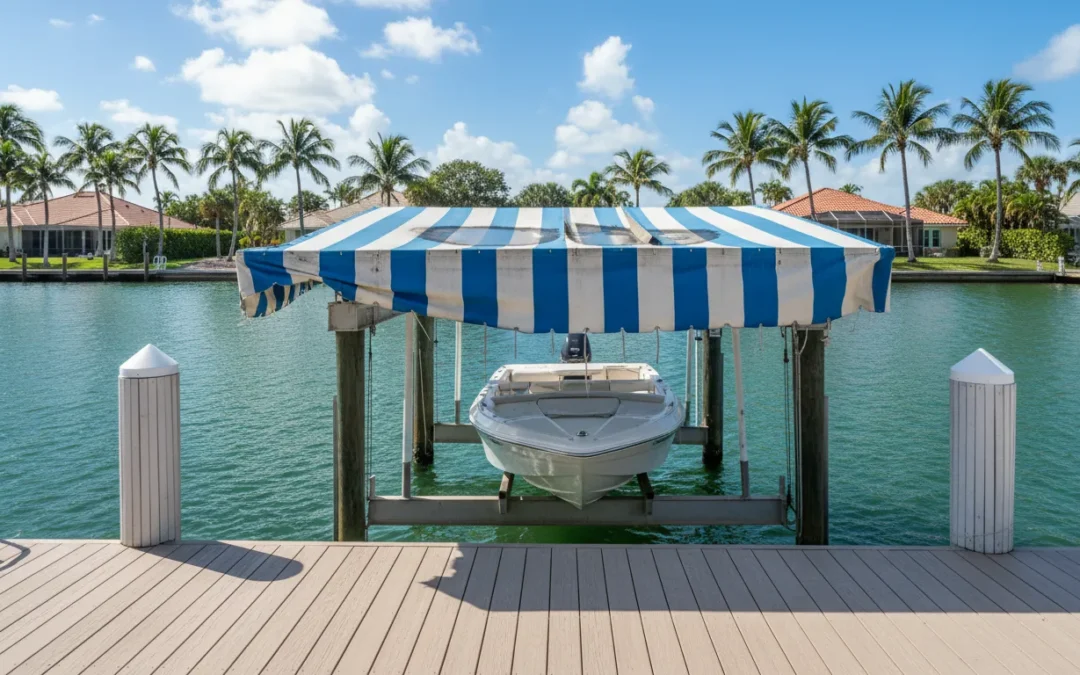
Your boat lift canopy takes a beating every single day. Between Florida’s punishing UV rays, salt-laden air, afternoon thunderstorms, and the occasional tropical system, even a well-built canopy will eventually develop problems. Knowing how to identify common boat lift canopy problems early, and understanding which ones you can fix yourself, saves you money and keeps your boat protected.
This guide covers the seven most common canopy issues Southwest Florida boat owners face, what causes each one, and the right way to fix them before they lead to expensive damage.
1. Sagging Fabric and Water Pooling
Sagging is the most frequent boat lift canopy problem, and it is also the most dangerous to ignore. When the canopy fabric loses tension, rainwater collects in low spots instead of shedding off the sides. A single pool of standing water can weigh hundreds of pounds, which stresses the frame, stretches the fabric further, and creates a downward spiral that accelerates damage.
What Causes Sagging
- Worn bungee cords: Bungees stretch and weaken over time, especially in Florida heat. Once they lose elasticity, the fabric loosens and dips between attachment points.
- Fabric stretching: Repeated cycles of rain loading and drying cause some fabrics to permanently deform. Lower-quality materials stretch faster than marine-grade vinyl-laminated fabrics like Patio 500.
- Frame misalignment: If a frame upright shifts or a rafter bends, the canopy tension becomes uneven, creating sag points on one side.
How to Fix It
Start with the bungees. Replace all bungee cords at the same time rather than swapping individual ones. Fresh bungees restore even tension across the entire canopy and often eliminate sagging completely. This is the most common fix and something most boat owners can handle themselves.
If new bungees do not resolve the pooling, inspect the frame for bent or shifted components. A misaligned rafter or loose upright needs professional attention to straighten and resecure.
When the fabric itself has permanently stretched and no longer holds tension even with new bungees, it is time for a canopy cover replacement. Standing water left unchecked will eventually damage the frame, turning a cover replacement into a full system replacement.
2. Mildew and Mold Growth
In Southwest Florida’s humid subtropical climate, some degree of surface mildew on your boat lift canopy is practically unavoidable. The combination of moisture, warmth, and shade creates ideal conditions for mold. The key is distinguishing between surface mildew you can clean and deep mold that signals a failing canopy.
Surface Mildew vs. Deep Mold
- Surface mildew: Appears as light green or gray spots on the canopy surface. It wipes away with mild soap and water and stays gone for weeks or months after cleaning.
- Deep mold: Shows as dark, stubborn stains that penetrate the fabric. Even after thorough cleaning, deep mold returns within days or weeks. This means the fabric’s protective moisture barrier has broken down.
How to Fix It
For surface mildew, clean the canopy every two to three months using a mild soap and water solution. Scrub gently with a soft-bristle brush, rinse thoroughly, and let the canopy air dry completely. Avoid bleach, ammonia, and pressure washers because they strip the protective vinyl coating and shorten fabric life. Check our boat lift cover maintenance guide for a complete cleaning schedule.
For deep mold that keeps returning, cleaning will not solve the underlying problem. The vinyl laminate has degraded to the point where moisture reaches the polyester base. This is one of the warning signs that a canopy replacement is needed rather than more cleaning.
3. Fading and UV Damage
Florida delivers more UV exposure than almost any other state, and your boat lift canopy absorbs all of it. Fading is more than a cosmetic concern. Significant color loss signals that UV radiation has started breaking down the fabric’s protective coating, weakening the material from the outside in.
What Causes It
UV radiation degrades the plasticizers in vinyl coatings over time. In Florida, daily temperature swings from cool mornings to 90-plus degree afternoons accelerate this process. South-facing canopies fade faster than those with partial shade from surrounding structures or trees.
How to Fix It
Mild, even fading across the entire canopy is normal aging and does not require immediate action. Continue regular cleaning to remove dirt that traps heat and accelerates UV damage.
When fading is severe and accompanied by fabric stiffness or brittleness, the canopy has reached a critical stage. Brittle fabric tears easily under wind load and cannot be repaired. At this point, replacing the canopy with a UV-resistant fabric like Patio 500 marine-grade material is the right move.
To slow UV damage on a new canopy, keep up with quarterly cleaning. Removing salt residue and environmental buildup prevents those particles from amplifying UV absorption on the fabric surface.
4. Torn or Damaged Bungee Cords
Bungee cords are the most-replaced component on any boat lift canopy. They are also the most overlooked. Worn bungees cause cascading problems because they directly affect canopy tension, water shedding, and wind resistance.
Signs of Bungee Failure
- Visible cracking or dry rot along the cord surface
- Permanent stretch where cords hang loose even when hooked
- UV bleaching that turns black cords gray or white
- Corroded or bent hooks that no longer grip frame attachment points
- Uneven canopy tension where some sections hang lower than others
How to Fix It
Replace bungee cords every 12 to 18 months as standard maintenance, or sooner if you notice any of the signs above. Always replace all cords at the same time to maintain even tension across the canopy. Use marine-grade bungee cords rated for UV exposure rather than generic hardware store cords, which deteriorate much faster in coastal conditions.
When replacing bungees, inspect the attachment points on both the canopy and frame. Corroded grommets or worn strap loops should be addressed at the same time. If you are not comfortable doing this yourself, most canopy service providers include bungee replacement as part of their routine seasonal maintenance visits.
5. Tears, Rips, and Punctures
Any break in the canopy fabric compromises the entire cover’s ability to protect your boat. Tears range from small punctures caused by a falling branch to large rips caused by storm debris or sustained wind stress. How you respond depends on the type and location of the damage.
Types of Canopy Tears
- Impact tears: Caused by branches, palm fronds, or storm debris landing on the canopy. Usually a clean hole or puncture in otherwise healthy fabric.
- Stress tears: Occur at attachment points, seams, or along fold lines where wind load concentrates. These often signal that the fabric is nearing the end of its lifespan.
- UV degradation tears: Happen when brittle, sun-damaged fabric gives way under normal wind load. The fabric crumbles rather than tearing cleanly.
How to Fix It
A single impact tear in otherwise strong, flexible fabric can often be professionally repaired with a marine-grade patch. The surrounding fabric needs to be in good condition for a patch to hold.
Stress tears along seams or at attachment points usually mean the fabric has weakened in that area. Multiple stress tears, or tears combined with other warning signs like mildew and fading, point to systemic fabric failure that patching cannot fix.
UV degradation tears are never repairable. If the fabric is brittle enough to crumble, the entire canopy needs replacement. Do not delay because a compromised canopy is far more likely to fail completely during a storm.
6. Bent or Damaged Frames
Frame damage is less common than fabric problems but far more serious. A bent rafter, shifted upright, or cracked weld affects the structural integrity of the entire canopy system and usually cannot be fixed with a quick adjustment.
Common Causes
- Wind overload: Tropical storms and strong cold fronts can bend frame components, especially hollow tube frames that lack the rigidity of solid construction.
- Standing water weight: Water pooling from a sagging canopy puts constant downward pressure on rafters. Over months, this bends aluminum components that were never designed for sustained static loads.
- Impact from boats or equipment: Accidental contact with a boat’s T-top, outrigger, or other equipment while docking can bend uprights or shift frame alignment.
- Corrosion weakening: Salt air corrodes frame joints and hardware over time, making them susceptible to bending under loads they previously handled.
How to Fix It
Minor frame misalignment where an upright has shifted slightly can sometimes be corrected by loosening hardware, realigning the component, and retightening. Check all baseplates and mounting hardware at the same time.
Bent rafters or uprights usually need professional assessment. Aluminum bends but does not spring back to its original shape. Attempting to force a bent rafter straight can crack the metal, creating a weak point that will fail under the next wind event.
If you are dealing with repeated frame damage or your frame uses hollow tube construction, consider upgrading to an I-beam boat lift frame. Solid I-beam frames provide significantly greater rigidity and wind resistance than hollow tubes, which is why they are the preferred choice in hurricane-prone areas.
7. Wind Damage and Storm-Related Failures
Florida’s storm season runs from June through November, and even a moderate tropical system can destroy a boat lift canopy that is not properly maintained or protected. Wind damage is often the final event, but the root cause is usually deferred maintenance that left the canopy vulnerable.
How Wind Damages Canopies
Strong gusts create lift forces on the canopy surface, pulling it away from the frame. Loose bungees, worn attachment points, and weakened fabric all reduce the canopy’s ability to handle wind loads. Once the wind catches an edge or a loose section, the forces concentrate and tear through the weakest point.
Frame damage during storms is more common with hollow tube construction. Solid I-beam frames with four uprights per side distribute wind loads more evenly, reducing the risk of component failure during a storm.
How to Prevent and Fix Wind Damage
Before storm season: Complete a thorough pre-season inspection. Tighten all hardware, replace worn bungees, check for fabric weak spots, and confirm that baseplates are securely anchored. Address any issues while you have time and calm weather.
During hurricane threats: The safest option for your canopy is professional removal before a storm arrives. Coastline’s Hurricane Protocol program provides pre-season booking for canopy removal and reinstallation so you are not scrambling when a storm is named and availability disappears.
After storm damage: Inspect the entire system before reusing the canopy. Check for bent frame components, torn fabric, and damaged hardware. Even if the canopy looks fine, test tension by spraying it with a hose to verify water sheds properly without pooling.
When to DIY vs. When to Call a Professional
Some boat lift canopy problems are straightforward DIY fixes. Others require professional tools, experience, or safety considerations that make a service call the smarter choice.
DIY-Friendly Fixes
- Replacing bungee cords (with marine-grade replacements)
- Cleaning surface mildew with mild soap and water
- Tightening loose hardware and mounting bolts
- Removing debris from the canopy surface after storms
- Spot-treating bird droppings and minor stains
Call a Professional For
- Bent or shifted frame components
- Canopy fabric replacement
- Weld repairs or frame reinforcement
- Full system inspections after major storms
- Pre-hurricane canopy removal and reinstallation
- Frame upgrades from hollow tube to I-beam construction
Preventing Problems Before They Start
The best approach to boat lift canopy problems is catching them early through consistent maintenance. A simple routine takes minutes per month and adds years to your canopy’s lifespan.
Monthly Quick Checks (5 Minutes)
- Look for any sagging or areas where water might pool
- Check bungee cord tension and condition
- Scan for new tears, holes, or worn spots
- Verify frame uprights are straight and hardware is tight
Quarterly Deep Cleaning
- Wash the entire canopy surface with mild soap and a soft brush
- Rinse thoroughly and let air dry completely
- Treat any mildew spots promptly
- Inspect stitching along seams and attachment points
Annual Professional Inspection
Even if everything looks fine from the ground, an annual inspection by a canopy professional catches issues you might miss, particularly frame joint wear, hardware corrosion, and early-stage fabric degradation. This is especially important in Southwest Florida, where salt air accelerates wear on metal components. Review our complete seasonal care guide for a month-by-month maintenance schedule.
Protect Your Investment
Most boat lift canopy problems are predictable and preventable. Sagging starts with worn bungees. Mold takes hold when cleaning is skipped. Tears happen where the fabric has already weakened. Wind damage exploits every deferred maintenance item at once.
Stay ahead of these issues with regular inspections, timely bungee replacements, and seasonal cleaning. When problems do arise, address them quickly. A small repair today prevents a costly replacement tomorrow.
If your boat lift canopy is showing signs of trouble, or if you want a professional evaluation of your current system, request a free estimate from Coastline Boat Lift Covers. Our team inspects, measures, and recommends solutions tailored to your specific boat lift and dock setup across Southwest Florida.